


Around 1.77 billion people worldwide now use ad-blocking tools, according to research from GWI. That’s nearly a third of the internet, blithely breezing past your Google Ad spend.
The industry's response has mostly been to throw the same cold spaghetti harder and faster, with the help of your friendly neighbourhood AI. And where’s that cash flowing? Into the same three channels that WARC's 2026 forecast shows absorbing 80% of global ad spend.
Disruptive advertising is a different approach. It intends to reframe how people think about a brand, a cause, or an issue, and grabs people by the ears in a way that conventional campaigns have to pay hand over fist for.

Here at Don’t Panic, we don’t really like to call our work “disruptive” but we do make ads that are challenging and intriguing, marketing that slaps you in the face and shouts “PAY ATTENTION!”. So we’ve put together this guide to what disruptive advertising is, how it works, and some excellent recent examples to demonstrate what we’re going on about.
What Is Disruptive Advertising?
Disruptive advertising is a strategic approach that earns attention by reframing how people see a brand, a cause, or an issue in an unexpected way. It creates something people actively choose to talk about and share, something that naturally gains media attention without a penny spent on PR.
Sounds simple. The craft beneath it is anything but.
- Every effective disruptive ad campaign starts with tension. Cultural friction, or an emotional truth the rest of your category ignores, a contradiction everyone knows but no-one’s brave enough to point out.
- Reach is earned, not paid. The idea travels because people pass it on, not because a media budget and tweaking ROAS pushed it there.
- Disruptive ads shift perception. Where traditional advertising tries to hammer home a message until it sticks, disruptive campaigns can change how people see the subject altogether.
- No single channel owns disruptive marketing. Billboards, social, experiential, PR, hell, even a flash mob like it’s the early 2000s. The idea and your own creativity dictate the format, your commitment decides if it works.
How Does Disruptive Marketing Differ From Traditional Advertising?
Traditional advertising places a message in front of people and repeats it, twenty times a day, loudly. Frequency builds familiarity (how many Weetabix can you eat?). Media spend determines reach (are you loving it?).
The formula works, up to a point, but that point is diminishing. In categories where audiences have learned to scroll past, skip, or block, repetition alone stops delivering.
Disruptive advertising creates something people choose to engage with. The reach comes from their reaction, not the budget.
Disruptive marketing vs guerrilla marketing
Guerrilla marketing is a tactic: using unconventional placement, low budget, and surprise in physical meatspace. Disruptive marketing is more of a strategic posture that can use guerrilla tactics but it can extend far beyond them. A good old flash mob is guerrilla. Aiming to reframe a public conversation takes disruption. Sometimes they overlap, but they aren't interchangeable.
For more on how earned conversation drives campaign reach, read our guide to buzz marketing.
Disruptive marketing vs disruptive innovation
Disruptive marketing and disruptive innovation often get confused simply because they share a word. Sorry, intrepid Google clickers. Clayton Christensen's venerable theory of disruptive innovation describes how smaller companies unseat market leaders through simpler, cheaper products. Related in spirit - less spend, more real - but different in scope and substance.
How Does Disruptive Advertising Work?
Most people see the stunt. The mechanics underneath it are what make the difference between a moment and a movement.
Find the friction first
Look for the unspoken frustration. Cognitive dissonance. Something that the audience already feels, and one that they’re getting weirded out by the fact no-one’s had the bollocks to even say something about.
The creative work needs to take that tension and make it visible, physical, shareable. It needs to be the kind of thing that stops people in the street and makes them grab their friend who didn’t see it. People will pass it on if it says what they were already thinking and puts it somewhere they can point to.
A good idea pays for itself
Speaking of ROAS, when a campaign earns press coverage, social sharing, and conversation without paid distribution, every pound works harder. According to research from WARC and Edelman, campaigns that connect with something people already care about don’t just sell more product. They lift the whole brand. And that lift is 11% larger than for campaigns that play it safe.
Every surface is a stage
And all the punters merely players. Think billboard takeovers, social media weirdness, absurd PR stunts that generate national press and get curtains twitching. Real-life interactions with real-life people that force a reaction in a public space. Disruption adapts to whatever surface puts the idea in front of the right people at the right moment.
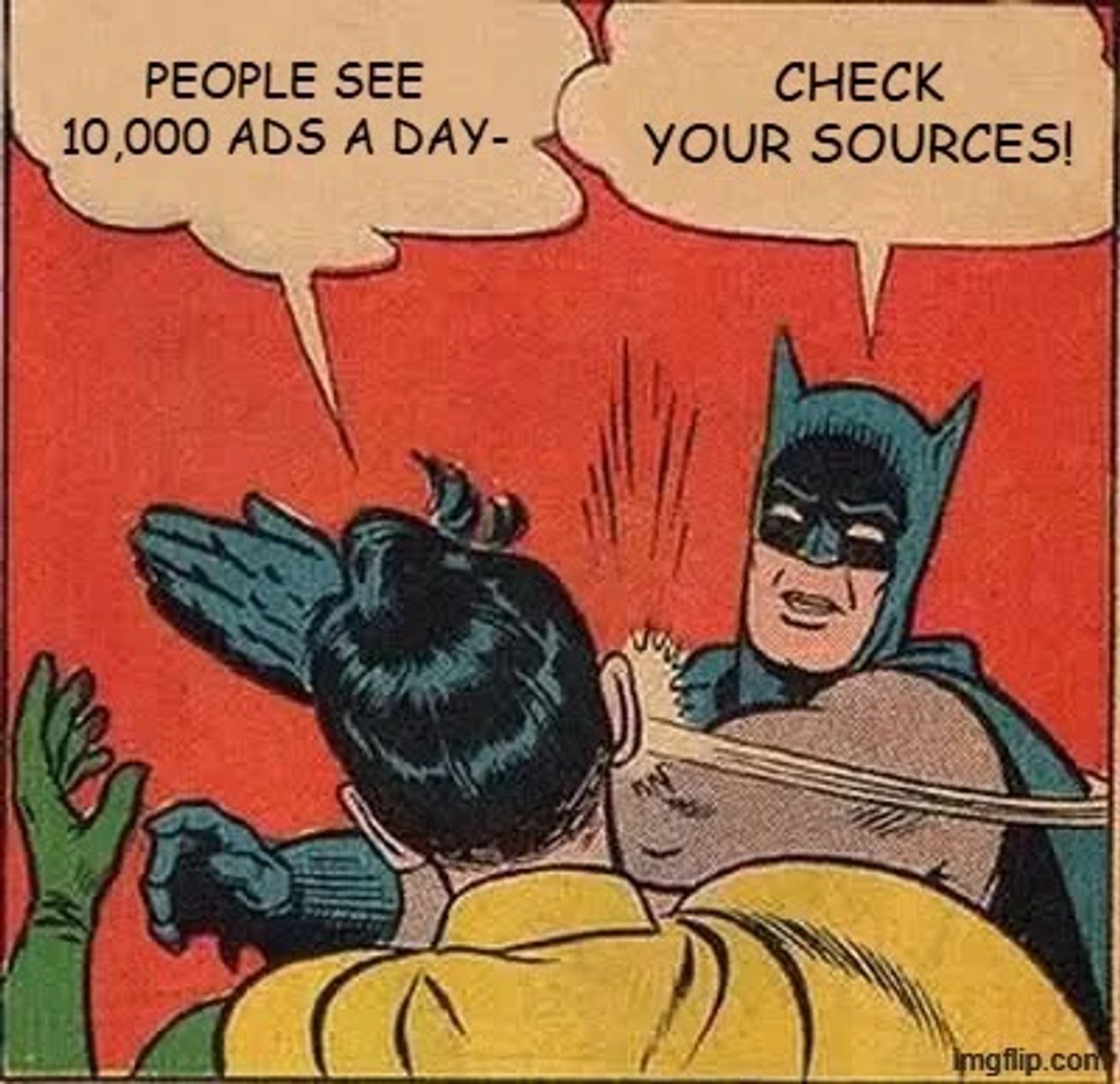
One note on catching attention: You'll often read that people encounter 6,000 or 10,000 ads per day. Fun fact: that figure is a load of lazy marketing industry echo-chamber crap, as The Drum's recent investigation found when it traced the claim back to its origin. The researcher most commonly cited told them he never endorsed a specific number.
When studies have actually counted, the real figure of how many ads people see a day sits closer to a few hundred. But the underlying problem is real: most advertising is invisible even when it’s not falling foul of a Chrome extension. The work that travels earns its place by saying something worth passing on.
For the psychology behind why people pass things on, read our guide to creating shareable content.
When Is Disruptive Advertising the Right Approach?
Bold creative earns attention. Knowing when to deploy it and when to hold back is the difference between capturing the zeitgeist and being a dick.
When do disruptive ads work?
Some conditions make a disruptive marketing campaign a natural fit. The category is drowning in sameness and the audience has already tuned out. A live cultural tension exists that the brand can connect with credibly. The budget is small relative to the noise required, and the idea has to do more than the spend.
But the most important condition is internal. The brand needs a genuine position worth defending. Something it actually believes, not a stance borrowed for a campaign and dropped the week after, like Pride for pretty much most of the world’s soulless corporations.
When does disruptive advertising backfire?
Provocation without a point looks opportunistic. Audiences spot it fast, and the attention it generates turns hostile. If the brand hasn't earned enough trust to take a stand, the stand collapses. And some subjects demand a sensitivity that provocation would undermine.
The biggest trap is mistaking volume for impact. Press coverage that doesn't shift how people think about the brand or its cause is wasted coverage. There's a difference between "people talked about us" and "people changed how they see us."
Getting the emotional register wrong accelerates the damage. Our guide to emotional advertising breaks down the principles that separate resonance from backlash.
Disruptive Advertising and Marketing Examples
Now we’re going to take a tear-gas-blurred look at six campaigns across different scales and budgets using varying mechanics, but each with a core ethos in common. Each one reframed how people saw a brand, a cause, or an issue and earned attention because of it. Yes, including us (Don’t Panic, in case the words stuck to the top of your screen are too subtle). You’re on our website, after all.
Don’t Panic x MAP: Killed Saving Lives (2025)

The concept behind "Killed Saving Lives" was simple: a public memorial wall in central London, listing the names of 1,686 Palestinian health workers killed in Gaza since the start of Israel’s war.
No paid media. No sponsored placement. Just a physical object in a public space that stopped people walking and got them talking about something that mattered.
The wall reframed abstract statistics, as Stalin would put it, into people with names. Each person, a life the news cycle had compressed into a number. The press covered it because the work made the scale of loss impossible to walk past. People photographed it, shared it, and carried the names further than any media spend could have.
ASICS: Desk Break Clause (2025)
ASICS called out something we’ve all known for a while with their "Desk Break Clause” campaign: sitting at a desk is dangerous for your brain. To prove their point, they created the first employment contract clause mandating movement breaks, backed by original research from King's College London.
Then they cast Brian Cox to launch it. TV's scariest executive, ordering employees to stop working, say “fuck the free fruit” and get moving. Then you see him in sports shorts and funky trainers. Expectations subverted at each turn.
The campaign generated 2.3 billion earned media impressions and an endorsement from the WHO Director General. A policy idea wrapped in a performance by a national treasure subverting expectations.
Don’t Panic x Oxfam: Stay in the Fight (2024)
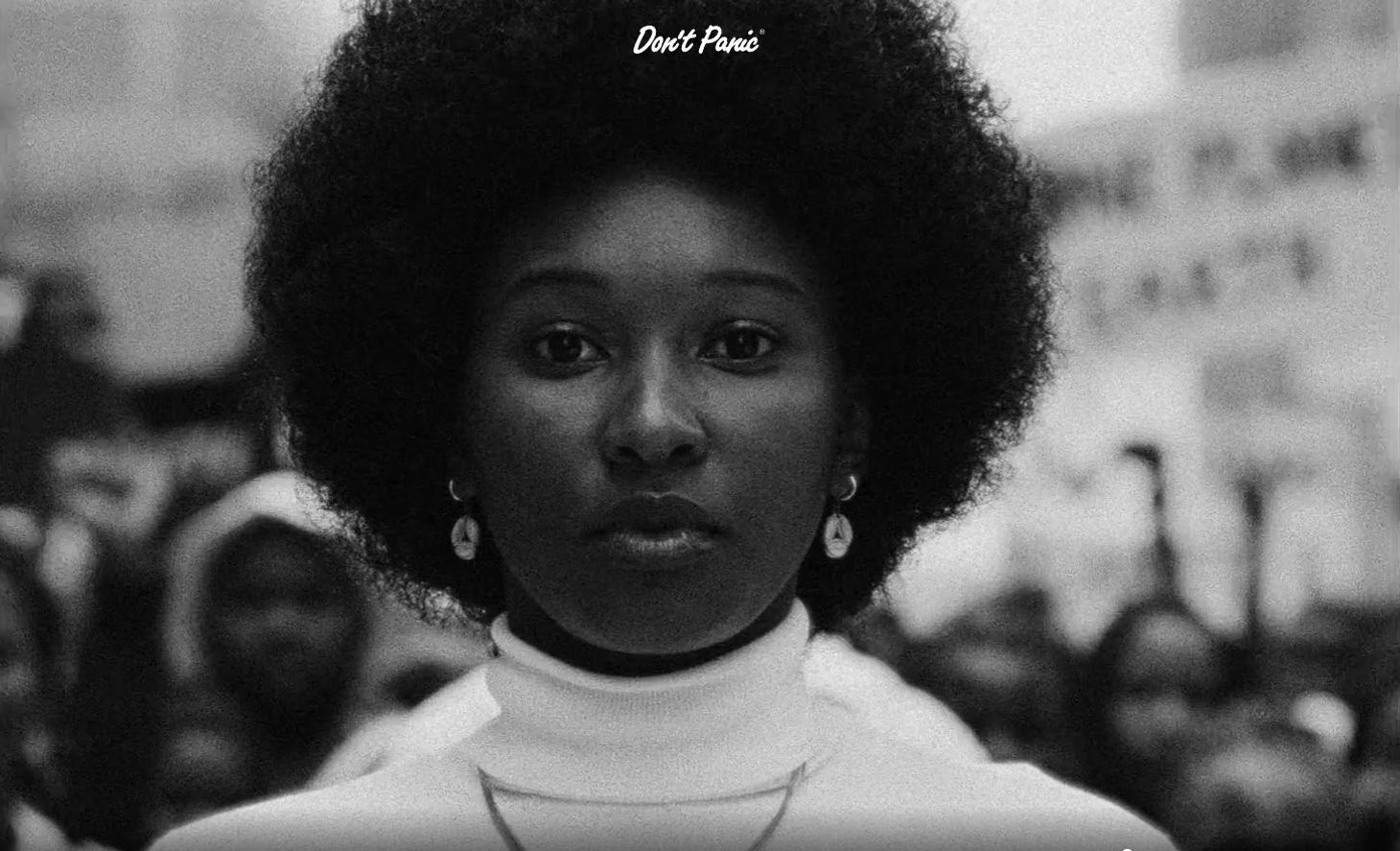
We shot "Stay in the Fight" inside a live protest in Kenya. There was no need to stage a crowd or hire extras. Our camera crews were deep in the thick of a real activist movement in action, and captured their passion as they poured it out.
The production method was what made it work. Instead of cajoling embarrassed RADA graduates to recreate activism in a studio, we put the audience inside the real thing. That rawness gave it an authenticity that staged footage can't replicate, and earned coverage across 300+ publications as part of the broader Oxfam activation.
The most credible way to show activism is to be proudly standing in the middle of it.
Canva: Waterloo Station Billboards (2025)
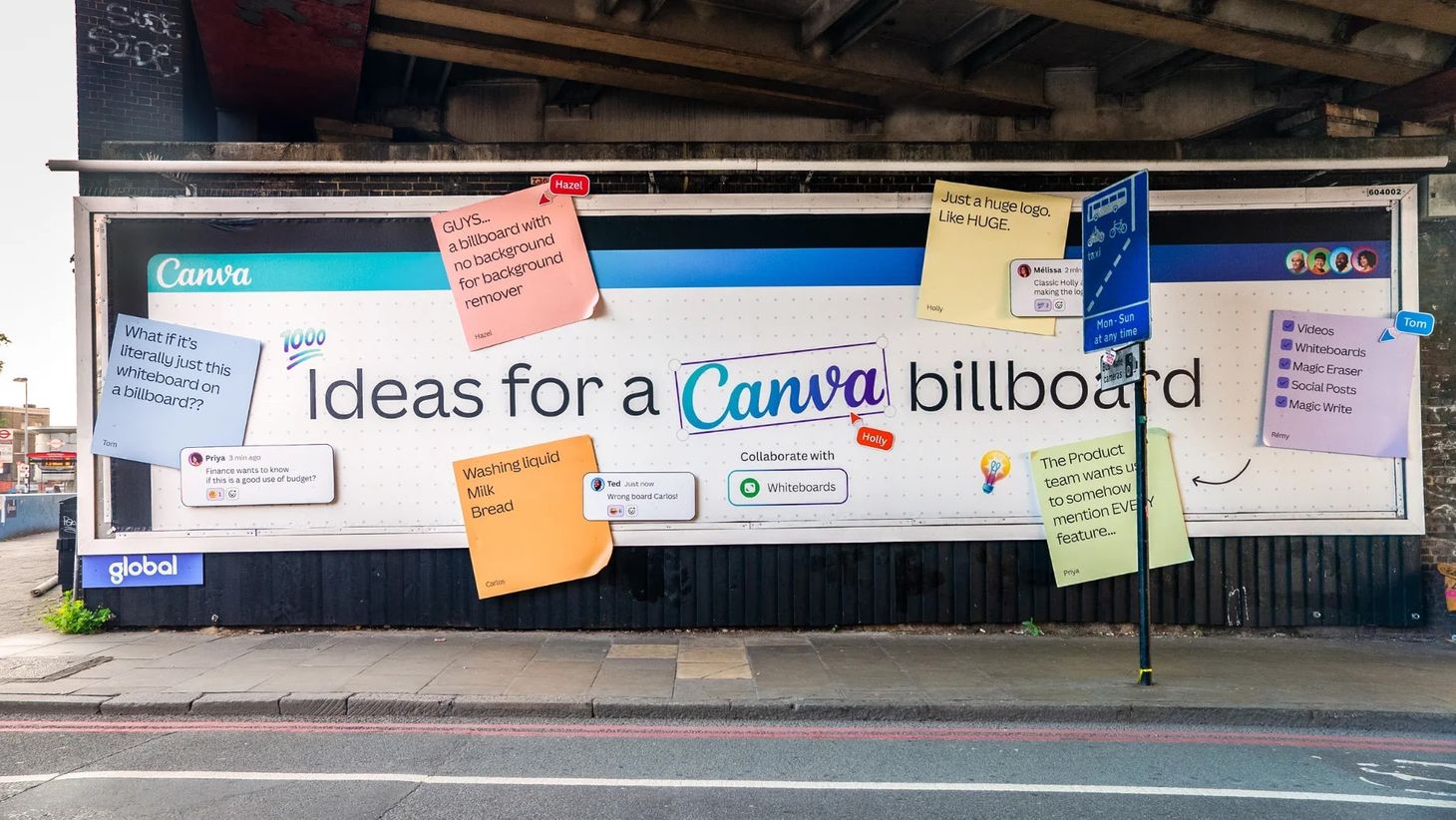
Canva took over all 14 billboards at London Waterloo with creative that deliberately made marketing execs’ eyes twitch involuntarily. A background remover ad with no background. A "make the logo bigger" execution where the logo had been blown clean off the frame in a clear nod to r/maliciouscompliance. Each apparent mistake showcased a specific Canva feature.
In a medium built for polish, their deliberately, self-awarely crap ads stood out for the right reasons. LinkedIn was awash with commuters showing their network how this ad taught them something about marketing themselves.
They turned OOH into social content without a single paid social placement, the sly dogs. Self-deprecating humour in a category that usually defaults to slick product demos and “look how great we make things look”. It was also a love-letter to graphic designers, who frankly deserve one.
Don’t Panic x BiteBack2030: It's Not Your Fault You Can't Resist (2022)
For "It's Not Your Fault You Can't Resist", we teamed up with a youth activist movement to create a fake junk food brand, and then launched it as if it were real. The whole shebang: packaging, branding, social accounts. The full works. Then we pulled back the curtain with a sleazy grin and showed the manipulation tactics the food industry uses to target young people.
The deception mirrored the slimy tactics it was exposing. People felt the discomfiting trick before they understood the real message. That emotional sequence is what made it stick. The reveal sparked global media coverage and forced a public conversation about how junk food reaches children despite all Jamie Oliver’s efforts.
Dr. Martens: Feel the Buzz (2025)
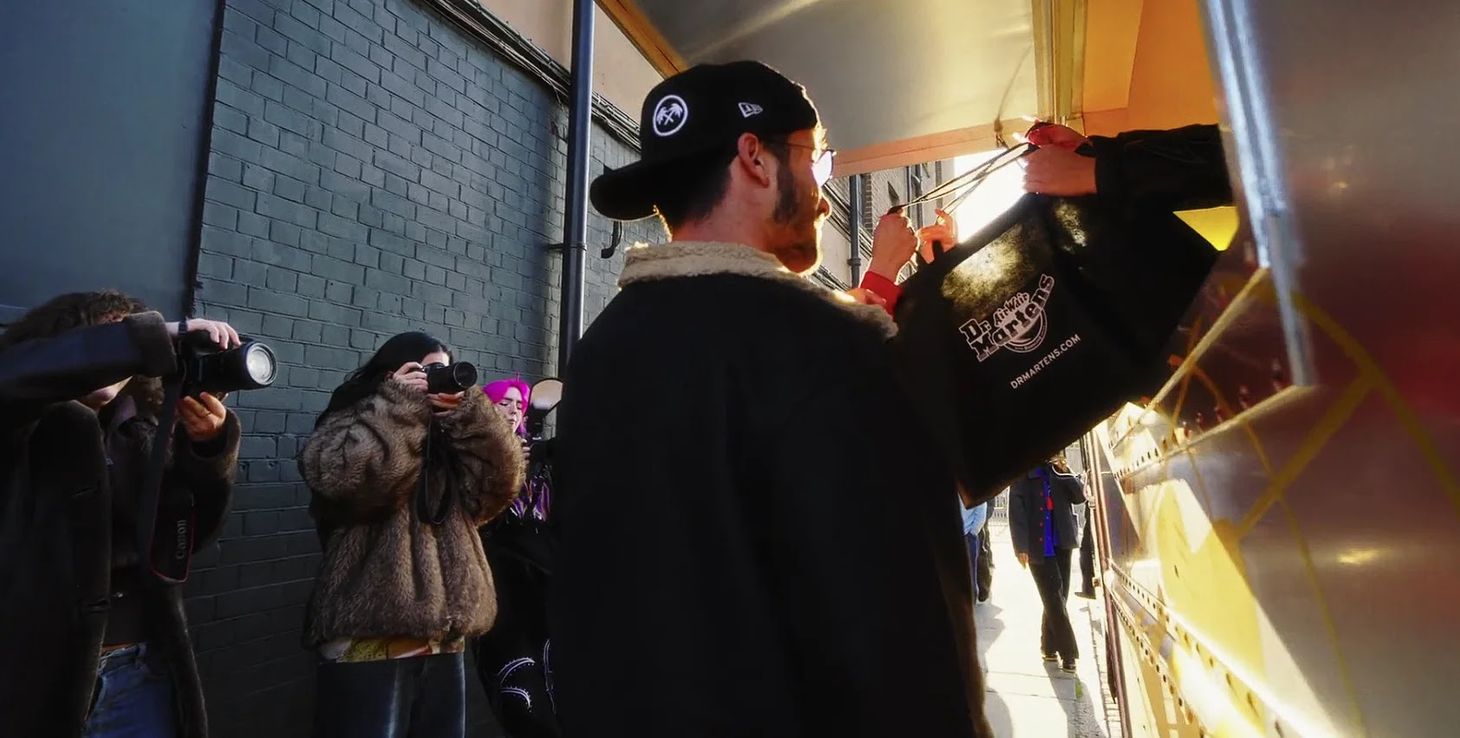
To launch their 90s-tastic BUZZ silhouette shoes, Dr. Martens sent a custom-built Buzzline Van across London. Part broadcast truck, part mobile brand hub. It kicked off at the brand's Camden HQ with live Foundation FM DJ sets and exclusive previews, then spent weeks hitting cultural hotspots across the city.
In-store activations at Oxford Circus and Camden. Creator seeding kits dropped from a hatch in the van. A finale run with Lola Young on her way to a headline gig. Read the names of her songs and say honestly that that wasn’t a choice.
There was no conventional media buy. The campaign was built to be encountered on the street and shared from there. A British brand with subcultural roots, cropping up in the places its audience already gathers and giving them something really worth blowing up Insta about.
Does Disruptive Marketing Actually Work?
The short answer: yes, disruptive marketing and advertising works, but only when the idea is sharp enough and the commitment runs deeper than a single campaign. If you’re a brand that trumpets your ethics while destroying the planet, you might want to look elsewhere.
WARC and Edelman's analysis of the world's most awarded campaigns found that 71% of the highest-performing work for both creativity and effectiveness measured PR value as a core metric. For all other awarded campaigns, that figure dropped to 29%. Campaigns that actually spoke up about causes that mattered did meaningfully and measurably better than those that shied away.
One provocative moment gets attention. Returning to the same position, campaign after campaign, builds something stronger and far more elusive: trust. Commit to a point of view, and over time you earn permission to be bold. The audience comes to expect it from you. That expectation is worth more than any single spike in coverage.
To see if your efforts are getting there: track brand lift, sentiment shift, quality of earned reach, and downstream action like donations, sign-ups, and sales. If people talked but nothing moved, that was a controversy or a blip. Not disruption.
Disruption works best when built on a challenger positioning. Read our guide to challenger brand strategy for the framework that makes bold work sustainable.
Frequently Asked Questions about Disruptive Advertising
Can disruptive advertising work for charities and non-profits?
Not only does disruptive advertising work for charities, it's where some of their strongest work happens. Charities often operate with smaller budgets and bigger things to say. That combination rewards creative approaches that earn media rather than buying it.
The mechanic is the same whether the goal is donations, behaviour change, or shifting public opinion: find the tension, make it visible, give people a reason to care.
What's the difference between disruptive advertising and shock advertising?
Shock advertising uses provocation to grab attention. The goal is a reaction: surprise, outrage, discomfort. Disruptive advertising uses reframing to shift perception. The goal is a change in how someone sees the subject. Shock fades once the initial reaction passes.
Disruption sticks because it changes understanding. A campaign can be both, but provocation without meaning is just noise.
How do you sell a disruptive campaign idea up the chain?
Start with the problem, not the execution. Show what conventional approaches are failing to achieve in the category and why. Present the cultural tension the campaign would tap into. Then show the mechanic: how the idea earns attention without relying on paid reach. Reference comparable campaigns with measurable outcomes. Leaders don't need convincing that bold work is exciting. They need evidence that bold work is effective.
Does disruptive marketing only work on social media?
Social amplifies it, but the best disruptive campaigns start in the physical world as often as the digital one. Billboard takeovers, public installations, experiential stunts, PR-first activations. The channel follows the idea. If the idea has genuine tension and a shareable core, it travels regardless of where it starts.
Let's Make Something Worth Talking About
Ad spend is growing as fast as people’s efforts to avoid seeing its results. The gap between what brands pay for and what people actually notice keeps growing with the noise.
That’s what our work and the other examples above have in common: earning a place by being real, and having the creative nerve and the willingness to say something worth repeating.
Every campaign in this article started with a real and strategic tension: something the audience already felt that nobody in the room was brave enough to take on. If you’re brave enough to challenge the status quo, we’ll build you a marketing strategy to make it happen.