



Most advertising still picks a side: build the brand, or drive the sale. The best campaigns refuse to, and following the money shows how rare that is.
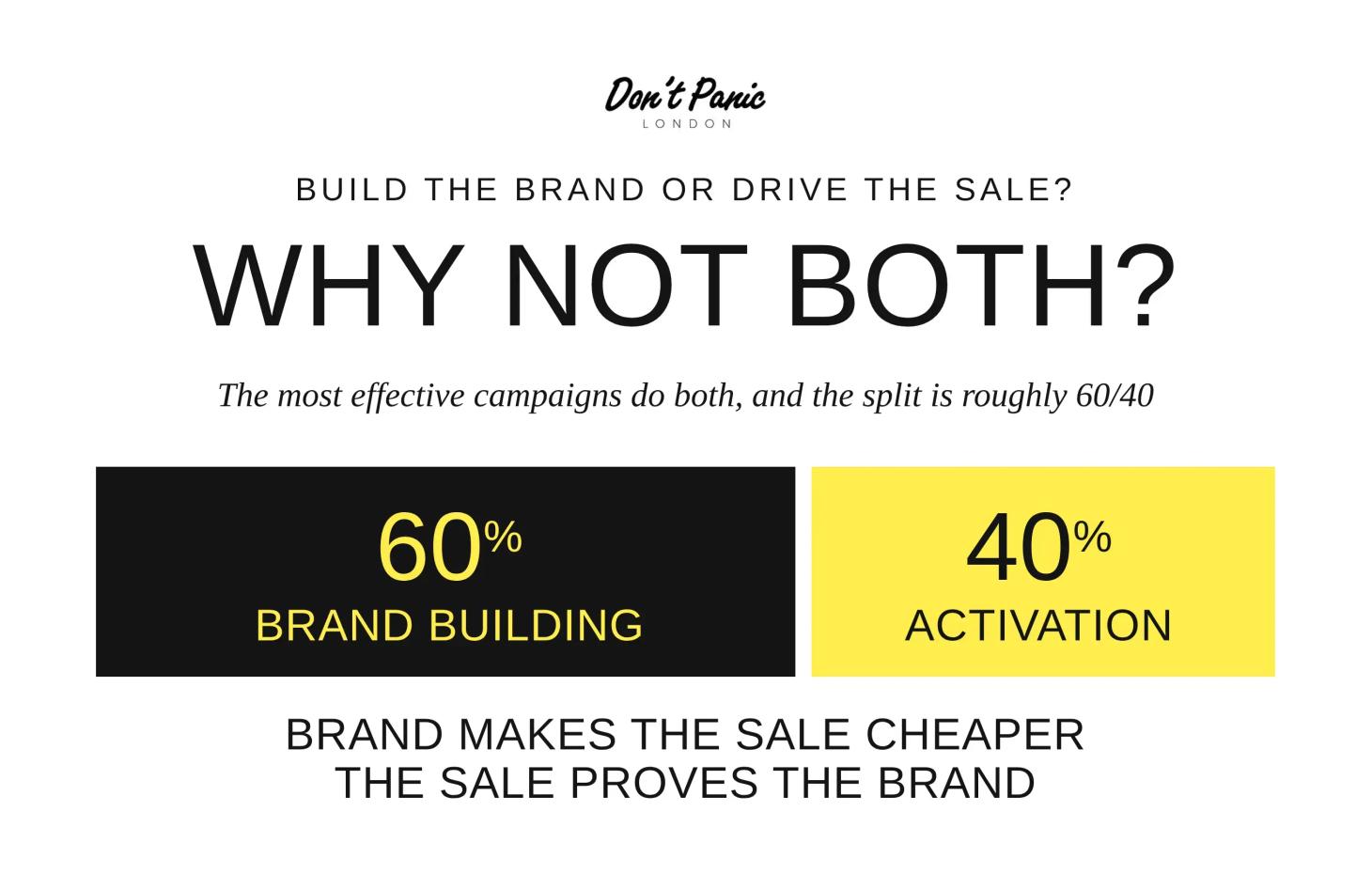
Adobe and MMA Global asked 389 senior marketers where the money goes, and found 57% of budget now sits in performance. Nearly a quarter have pushed more that way in the last year alone. The optimum, by the IPA's long-run effectiveness data, runs almost the other way: roughly 60% into brand building, 40% into activation. The industry knows the number but is spending past it.
That gap is the problem. Most advertisers still run the two as separate budgets, owned by separate teams, judged on separate scorecards, and the performance side keeps winning the argument because it is the half you can count by Friday.
Brand response closes that gap, and it is the bet we make on most briefs.
Brand response at a glance
- Brand response advertising builds long-term brand equity and drives short-term action in a single campaign.
- Brand response advertising fuses the two halves the IPA effectiveness data rewards: the 60 that builds the brand and the 40 that activates demand.
- Brand response advertising differs from direct response by refusing to trade memorability for a click.
- Brand response advertising differs from pure brand advertising by carrying a response mechanism in the creative itself.
- Brand response advertising is judged on three things at once: brand lift, response, and earned attention.
What is brand response advertising?
Brand response advertising is work that builds the brand and drives a measurable response in the same campaign. It uses one idea to do two jobs: create the memory and emotion that pay off over years, and prompt an action you can count this week.
It is not a format or a channel. It is an intent, and the intent is the hard part. Anyone can bolt a discount onto a brand film; brand response means the brand idea and the reason to act are the same thought.
This is where it parts ways with direct response. Direct response chases the action now and lives or dies on cost per acquisition, then fades as fast as it spiked once the spend stops. Brand response keeps that response mechanism but wraps it in a brand idea worth remembering, so it drives the action now and builds the memory that makes the next one cheaper.
The term matters because it names a refusal. It rejects the old split between brand advertising that cannot be measured and direct response that cannot be loved.
Why brand response advertising works
The two effects compound. Brand building creates the mental availability that makes activation cheaper, and activation turns that availability into sales you can track. Run them together and each makes the other work harder.
The numbers point to a balance. The IPA's analysis put the optimum split at 60:40 brand building to activation, later refined to 62:38. Lurch to either extreme and you leave money on the table: all activation buys a sugar rush with no equity behind it, all brand buys awareness that never converts.
There is a cultural reason too. Audiences scroll past advertising that only sells, and forget advertising that only entertains. The work that survives the scroll gives people something to feel and something to do at once, which is the ground we cover in our guide to disruptive advertising and marketing.
How to run a brand response campaign
A brand response campaign is designed as one thing, not assembled from two. Three principles keep the brand job and the response job pulling together.
1. Start with the brand idea, not the offer
Lead with an idea people want to watch, share, or remember. The brand thought comes first because it is the part that compounds, and the offer is easy to add once the idea is strong.
Meliá's "For the Curious Ones" did not open with a room rate. It opened with an idea about the kind of traveller who books the trip: the curious one, the person who wants the detour, the local secret, the thing the guidebook missed. We built that thought into a brand platform, and the booking sat underneath it.
And it moved the numbers underneath. The work drove a 27% global sales uplift, a 136% rise in social engagement, and a 21% lift in organic social reach. The curiosity idea could carry a global brand; a room rate could not. Start with the rate instead and you get a discount nobody remembers past checkout.
2. Build the response mechanism into the creative
The response cannot be an afterthought stapled to the end. Put the reason to act inside the idea, so the call to action lands as the next beat of the story rather than a hard cut to a sell.
The test we use is simple. If you removed the brand and the ad still made sense, the brand was decoration; if you removed the call to action and the ad lost its point, the response was bolted on.
Good brand response fails both tests on purpose. Take either half away and the idea collapses.
3. Plan media for reach and action together
Buy broad reach to build the brand and targeted, measurable placements to capture demand, then wire the two together on one plan. Brand response falls apart when the brand film runs through one agency and the performance ads through another, each chasing its own metric.
The same idea should travel intact, from the 40-second hero to the six-second cutdown to the paid-search line.
Brand response advertising in practice
It’s easy to nod along to the theory. In practice, the hard part is one idea carrying both jobs at once. Here are three campaigns that show the principle in action.
MSC: Buy Blue, Protect Dinner
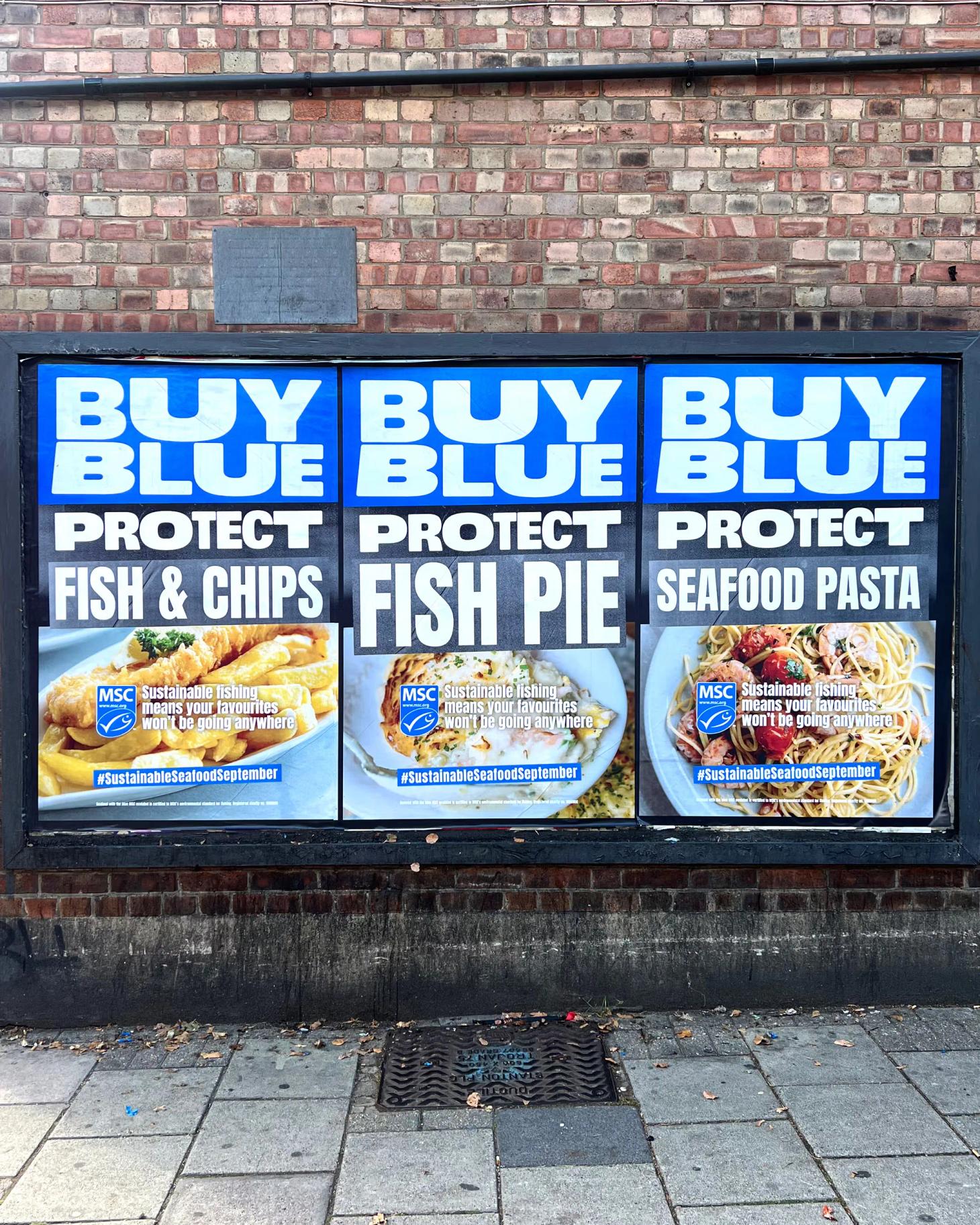
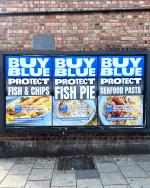
We made Buy Blue, Protect Dinner for the Marine Stewardship Council. The MSC needed to build recognition for its blue ecolabel, the slow brand job, and get people to reach for that label in the supermarket, the fast one.
So the campaign did not lecture anyone about overfishing. It told them the fish and chips, the fish pie, the seafood pasta they love are worth protecting, and gave them one thing to do about it: look for the blue label when they buy.
The brand thought, protect the dinners you love, is also the reason to act. Take either half away and it collapses.
Shelter: Earworm
For Shelter, Earworm took the everyday frustration of being left on hold and turned it into the reason to give. A schoolboy sings Bonnie Tyler's Total Eclipse of the Heart all day, joyful until the reveal: it's the tune stuck in his head from the hold music on his mum's calls chasing a safe home. It's Don't Panic's fifth consecutive Christmas film for Shelter, and within days of launch it had been picked up by The Drum, LBB and Ads of the World, the kind of reach a bolted-on call to action rarely buys.
Sumatran Orangutan Society: Concrete Jungle
Concrete Jungle needed to raise a fixed sum for the Sumatran Orangutan Society to buy back a plot of rainforest. The film made deforestation feel close by stranding familiar jungle characters on grey city streets, then pointed the emotion at a single action: donate to the appeal. It raised the full £870,000 target, with donations from 42 countries.
The lesson for your own brief is that the brand job and the response job are easier to hit when they are the same idea, not two ideas sharing a budget. Find the thing your audience already feels, then make the action you want the natural next move from feeling it.
How to measure brand response
Measurement is where brand response has to prove itself. It earns the name only if you track both halves, which means three layers read together rather than in isolation.
Brand lift: the slow signals
These move over quarters, not days, so read them that way. They tell you the work is building memory.
- Awareness and consideration: prompted and spontaneous awareness, consideration and purchase intent, from a brand tracking study.
- Share of search: your branded search against the category's, in Google Trends. The closest thing to a leading indicator of market share.
- Owned demand: branded search volume in Google Search Console, plus direct and organic traffic in GA4.
Response: the fast signals
These land in days and weeks. They prove the work moved someone to act.
- Action: conversions and conversion rate, enquiries, form fills and calls, tracked in GA4.
- Commercial: sales and revenue against a control period, cost per acquisition, and return on ad spend.
- Incrementality: the sales the campaign actually caused, isolated through a geo-test or marketing mix model where budget allows.
Earned attention: the multiplier
This is the layer pure performance work rarely produces. A strong idea earns reach it did not pay for.
- Coverage: volume and quality of the publications that pick it up.
- Spread: social shares, saves, and organic reach.
- Value: estimated earned media value against media spend, plus the backlinks and referring domains the idea wins on its own.
The mistake is reporting one layer and ignoring the rest. A campaign that lifts brand metrics but drives no response is brand advertising; one that converts but leaves no memory is direct response. Brand response shows movement on all three, which is why our earned media work is measured alongside sales, not instead of it.
When brand response is the right call
Reach for brand response when you need to grow a brand and hit a number in the same period: a launch, a category push, a reappraisal moment. It beats pure brand-building when finance wants proof this quarter, and it beats pure direct response when short-term sales have plateaued because nobody remembers you between purchases.
Stay closer to pure activation when demand already exists and the job is simply to capture it, such as the price-comparison search where Compare the Market and its rivals fight on the mechanism, not the memory.
Stay closer to pure brand when the purchase is years away and being remembered is the only job that matters.
Most briefs we see live in the middle, and that middle is where brand response does its best work.
Common questions about brand response advertising
Is brand response the same as brand awareness?
No. Brand response is not the same as brand awareness. Awareness is one outcome of the brand-building half; brand response also carries a response mechanism and is measured on the action it drives, not on recall alone.
How is brand response different from performance marketing?
Brand response differs from performance marketing by refusing to optimise for the click at the brand's expense. Performance marketing chases the cheapest conversion, while brand response wants the conversion and the memory that makes the next one cheaper.
Can small budgets run brand response advertising?
Small budgets can run brand response advertising. The 60:40 logic is a ratio, not a spend threshold, so a modest budget works harder when one idea carries both jobs than when it funds two disconnected efforts.
How long does brand response take to work?
The time it takes for brand response marketing to work varies. The response half shows within weeks, since activation drives action you can count quickly. The brand half compounds over quarters, as memory and consideration build. That split is the point: you get a short-term signal to prove the work is landing and a long-term one that makes the next campaign cheaper.
Build advertising that does both
The split between brand and response was always a budgeting habit, not a law of advertising. The effectiveness data, and the work that wins, point the other way: one idea, built to be remembered and built to be acted on. That is the bet we have always taken, and it is the one the numbers keep rewarding.
It is harder than picking a side, and that is the point. One idea that builds the brand and drives the sale is the bet Don't Panic makes on most briefs, and it runs through our earned media work. If that is the campaign you want, let's talk.