

The UK's challenger FMCG brands grew sales 48.9% year on year in 2025, against 3.4% for the rest of the industry. That gap is the story of the category right now.
It matters because the brands posting those numbers aren't outspending anyone. They're out-thinking them.
The work that cuts through in FMCG isn't the work with the biggest budget. It's the work with the sharpest conviction.
So this is a shortlist worth your time. Independent challengers and B Corps, where craft and conscience line up, and the best work travels because people want to pass it on.
Yes, Coca-Cola and Cadbury can buy a glossy film and a Christmas slot. That's not this list. This list is the brands making the giants nervous.
At a glance: the picks worth your time
Here's each pick and the one-line reason it cut through. Full entries below carry the numbers and the lesson.
- Tony's Chocolonely, "There's Fight in Every Bite": Your mission is the creative idea, not the small print under it.
- Oatly, "Do the Blind Taste Test": If doubt is the obstacle, design the campaign to disarm it in public.
- Who Gives A Crap, "Uncrap the World": A worthy mission doesn't have to mean worthy advertising.
- Lucky Saint, "Thou Shalt Go To The Pub": Sell the occasion, not the absence.
- Toast Ale, "Breaking Bread": collaboration beats competition when the mission is bigger than the brand.
- Surreal, the fake-celebrity campaign: When you can't outspend the incumbent, out-think them.
- Yorkshire Tea, "The Biscuit Thief": Consistency is a creative strategy, not a limit.
What counts as cutting through
Cutting through isn't winning an award or going viral for a day. It's work that gets shared because people want to, then turns that attention into something. The ones that manage it share four things.
- Brand-ethics standing: does the brand behind the work hold up when you look past the ad?
- The creative insight: the one idea that reframes a low-interest product into something people want to talk about.
- The measurable result: earned reach, awareness lift, or sales movement you can actually point to.
- The transferable lesson: the bit you can take back to your own brief and use on Monday.
Every entry below is judged against those four. Ethical standing comes first here, on purpose. It's the lens no competitor listicle bothers to apply, and it's the kind of purpose-led thinking we build campaigns around.
The challengers worth watching
This is where the admiration sits. These brands carry the ethics and the ideas at once, which is exactly why they're growing faster than the giants.
None won by spending more. They won by having something to say and the nerve to say it plainly. For the case behind that, our brand purpose guide sets out why it works.
There's Fight in Every Bite, Tony's Chocolonely
Tony's Chocolonely built a chocolate brand on one uncomfortable truth: the cocoa trade runs on exploitation. In February 2026 it put that truth on national TV for the first time, with two wrestlers, Tony and X-Ploitation, brawling behind two women calmly eating a bar.
What made it work: the brand refused to soften its mission for the mainstream moment. A debut TV ad is usually where a challenger goes safe. Tony's went harder, turning a supply-chain argument into a literal fight you couldn't look away from.
The numbers: the campaign ran on £500,000 of Sky Media support won through the Sky Zero Footprint Fund, after Tony's took the fund's Champions category for established sustainability brands.
The lesson: your mission is the creative idea, not the small print under it. Lead with the thing that makes you uncomfortable and the audience leans in.
Do the Blind Taste Test, Oatly
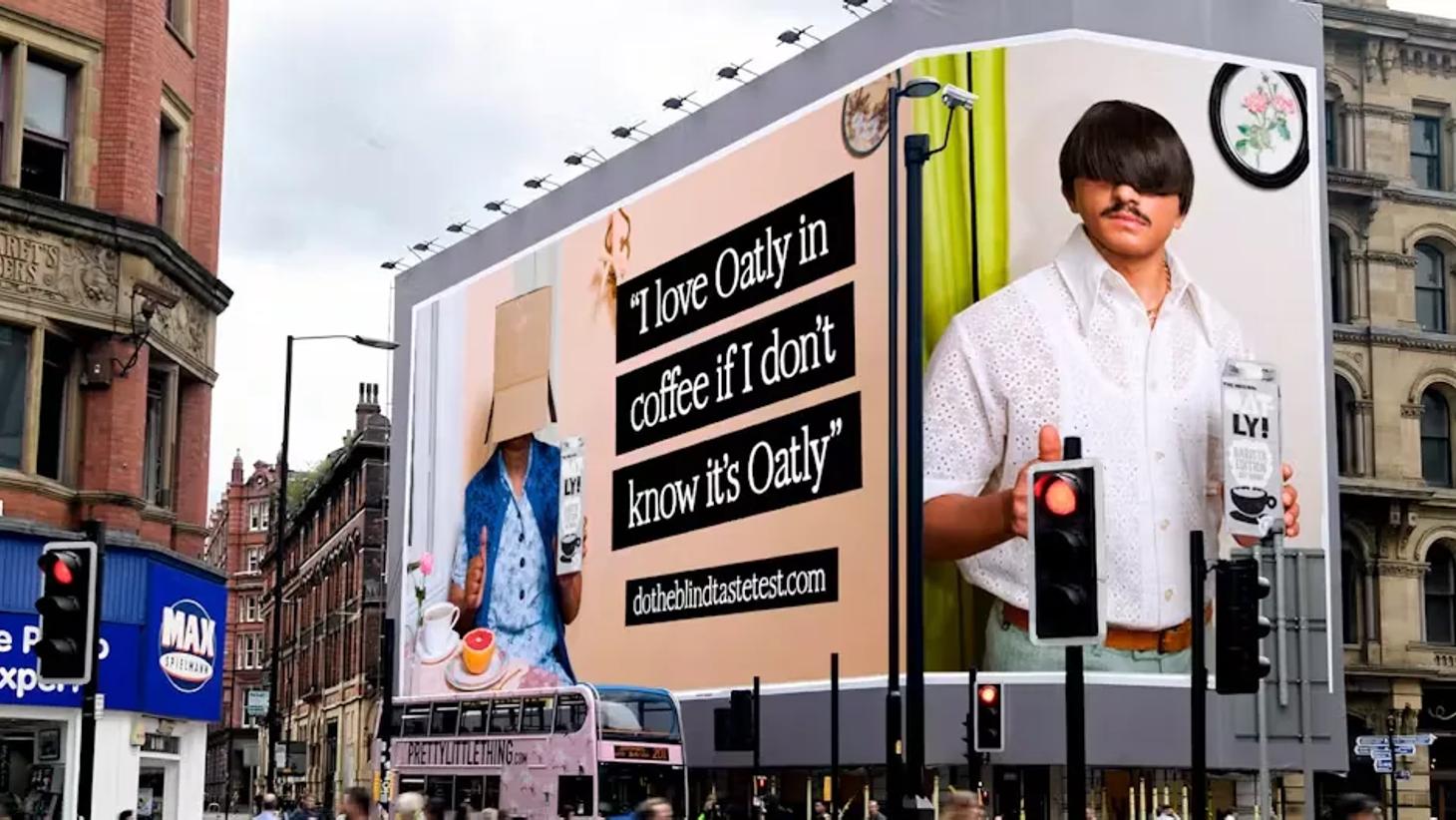
Oatly knows its biggest barrier is the sceptic who's decided oat milk can't taste good. So in March 2025 it ran a blind taste test and built the whole campaign on the result. The line that landed across UK billboards: people love Oatly when they don't know it's Oatly.
What made it work: the campaign turned the brand's main objection into its main argument. Instead of insisting the product is good, it let strangers prove it and then printed their verdict.
The numbers: the outdoor work rolled out across Bristol, Birmingham, Edinburgh, Leeds and Glasgow, with a London push handing out free coffees through a Grind partnership.
The lesson: if doubt is the obstacle, design the campaign to disarm it in public. Proof beats persuasion every time.
Uncrap the World, Who Gives A Crap
Who Gives A Crap sells recycled toilet roll and gives half its profits to sanitation projects. The hard part is making anyone care about the dullest product in the bathroom. "Uncrap the World" did it with humour, scale and a straight face about a daft subject.
What made it work: the brand treated a low-interest category as a comedy opportunity, not an apology. Half its profits go to sanitation projects, all carried by jokes people actually wanted to share.
The numbers: the campaign drove a nine-point lift in UK brand awareness and 54.2 million TikTok views, and went on to win Best Environmental Integrated Ad Campaign at the 2024 IAC Awards.
The lesson: a worthy mission doesn't have to mean worthy advertising. Make people laugh and the cause travels further than a guilt trip ever would.
Thou Shalt Go To The Pub, Lucky Saint
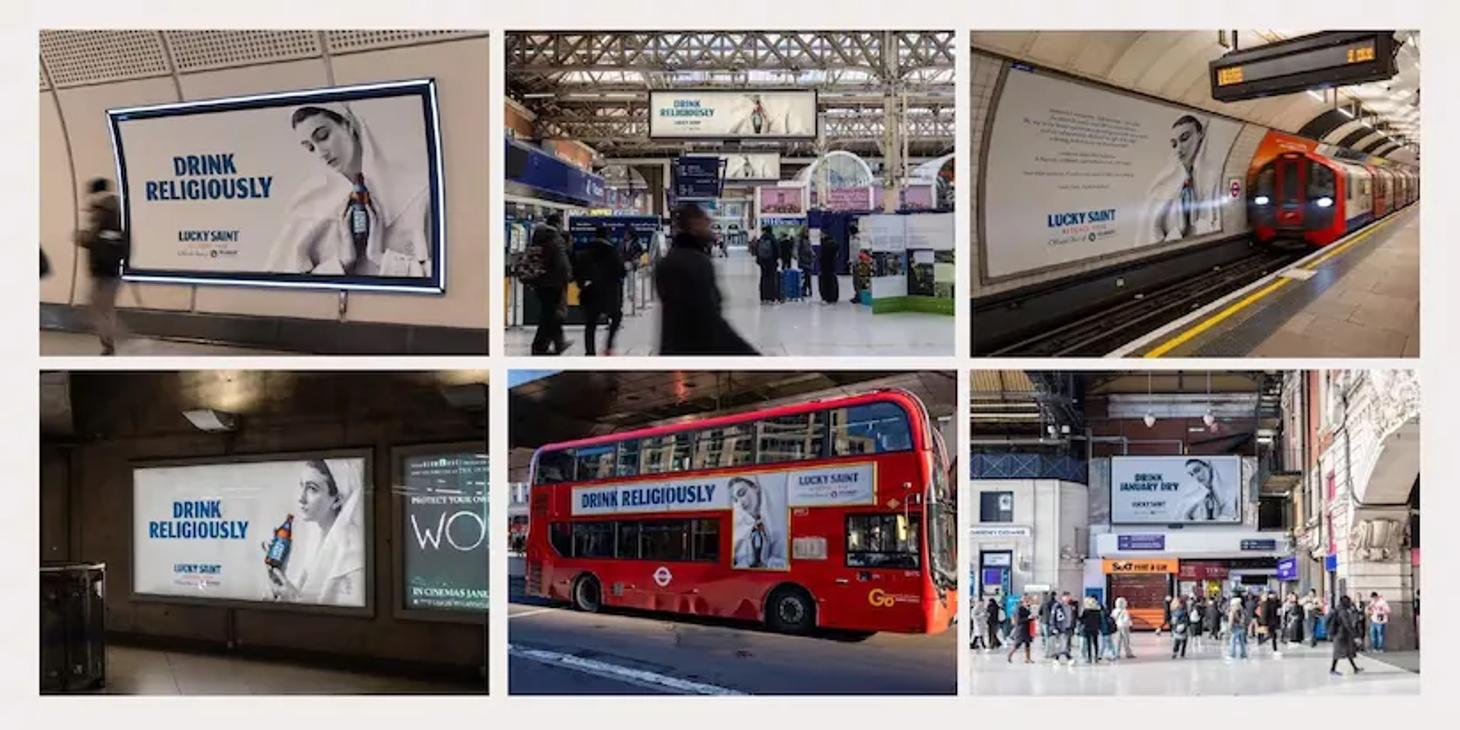
Lucky Saint is the UK's largest independent alcohol-free beer brand and a Certified B Corp, founder-led since 2018. For January 2025 it skipped the usual Dry January guilt and sold the ritual instead, urging drinkers and non-drinkers alike back into the pub with a free golden lager waiting at the bar.
What made it work: the brand reframed its own category. Most alcohol-free marketing leans on what you're giving up. Lucky Saint sold what you keep, the table, the round, the night out, and made abstaining feel social rather than solitary.
The numbers: the January campaign drove Lucky Saint being seen more than 200 million times, with its Tap Map used 219,000 times, a 65% year-on-year jump, across pubs nationally.
The lesson: sell the occasion, not the absence. When you reframe what your product is for, you stop competing on the thing you can't win.
Breaking Bread, Toast Ale
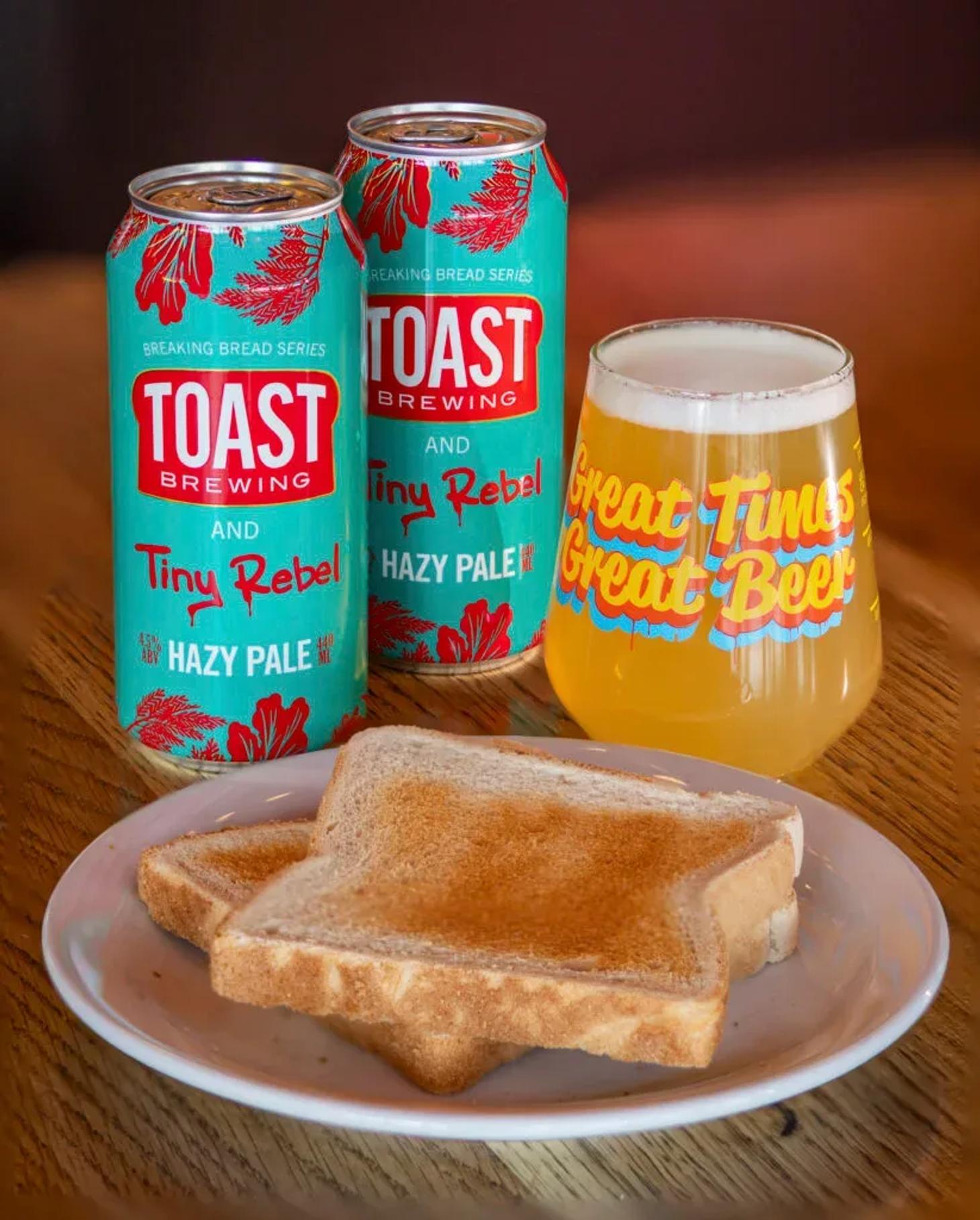
Toast Ale, a certified B Corp, brews beer from surplus bread that would otherwise be binned, and gives all its profits to environmental charities. In June 2025 it launched "Breaking Bread", a series of limited-edition collaborations with established UK breweries, opening with a pale ale made alongside Tiny Rebel and sold through the Co-op.
What made it work: Toast turned its founding constraint into an invitation. Rather than lecture about food waste, it brewed with rivals and made the waste story the reason to share a pint, not the reason to feel bad about one.
The numbers: the launch ale used 19,000 slices of surplus bakery bread and rolled out across more than 500 Co-op stores nationwide, against a UK backdrop of 20 million slices wasted a day.
The lesson: collaboration beats competition when the mission is bigger than the brand. Invite the people you'd normally fight and the story travels further.
The fake-celebrity campaign, Surreal
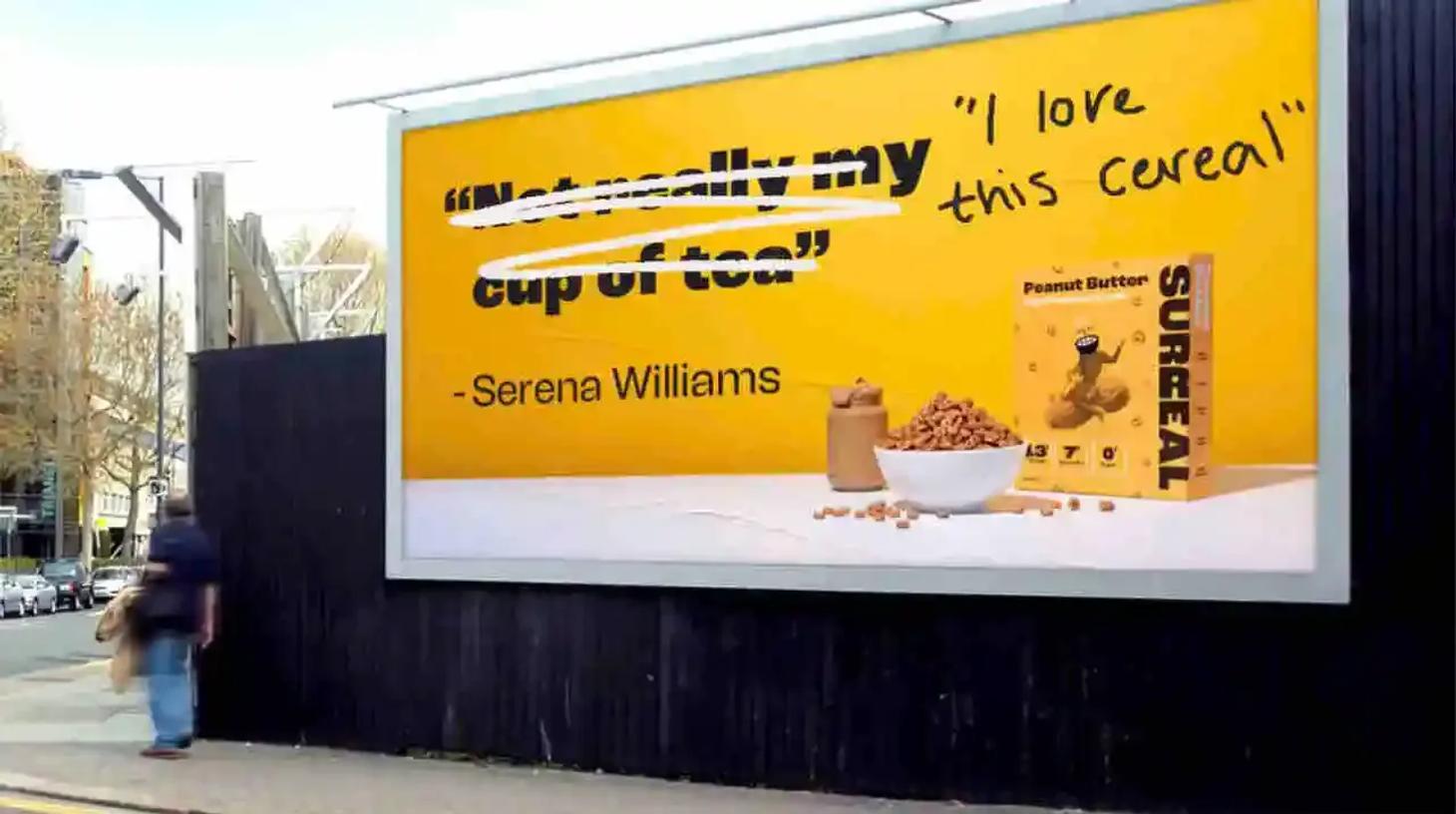
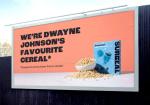
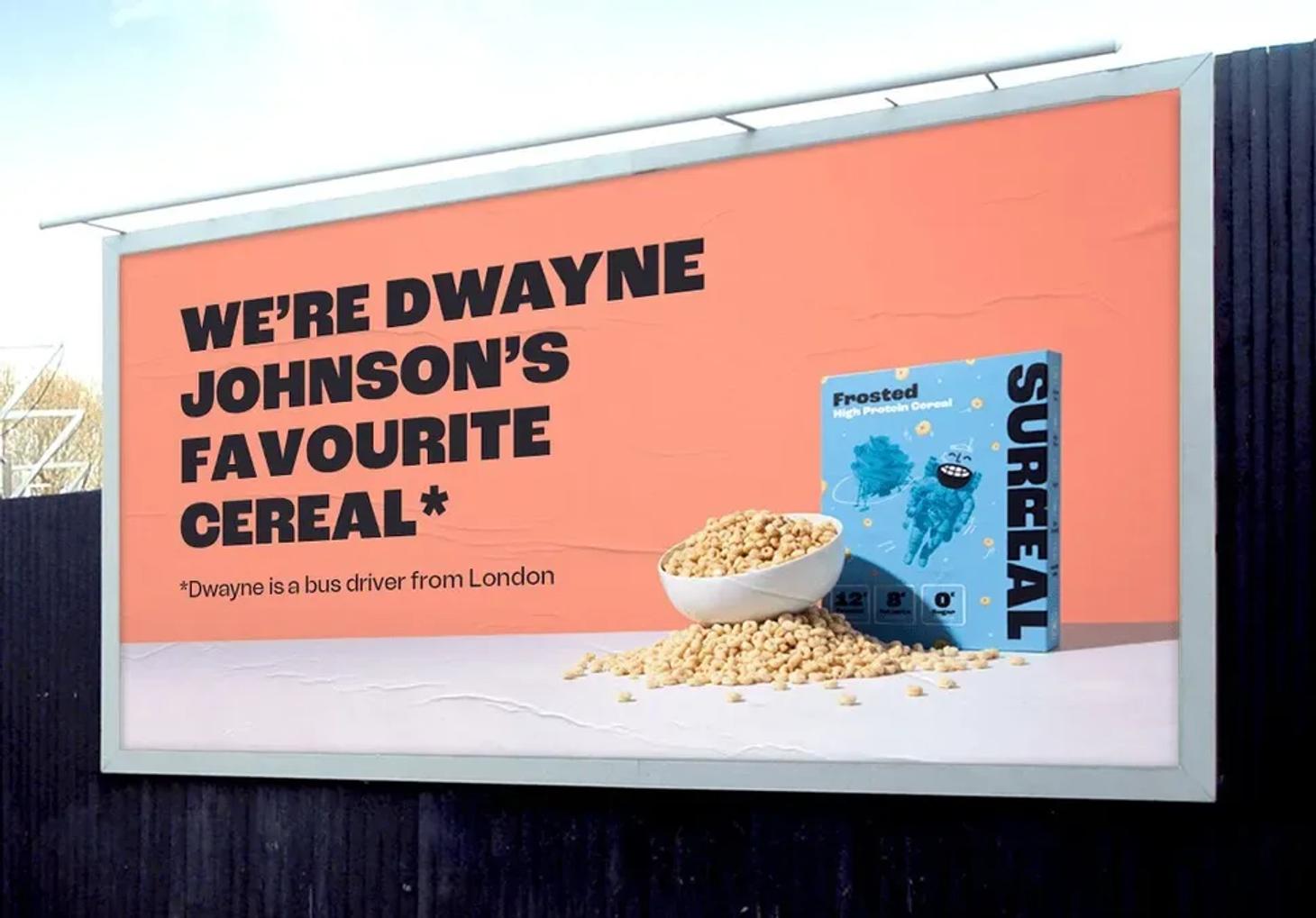
Surreal is the independent cereal brand that decided fighting Kellogg's on spend was a losing game, so it fought on wit instead. Its breakout work ran billboards endorsed by Dwayne Johnson and Serena Williams: ordinary people who happened to share the names, not the famous ones.
What made it work: the joke was the strategy. Surreal manufactured the ambiguity, let the internet do the heavy lifting, and made a tiny media budget behave like a national one.
The numbers: by reported figures, a fake-celebrity post pulled 13.3% engagement from Surreal's 31k followers against 0.02% from Kellogg's million-strong following using the real Lizzo.
Surreal has since become the fastest-growing cereal brand in the UK, stocked in over 3,500 stores.
The lesson: when you can't outspend the incumbent, out-think them. A sharp idea is the only media multiplier that's free.
The Biscuit Thief, Yorkshire Tea
Yorkshire Tea is a fourth-generation independent family business, owned by Bettys & Taylors of Harrogate, not a multinational. "The Biscuit Thief" extends the brand's daft, deadpan Yorkshire world without straining for it.
What made it work: years of the same deadpan Yorkshire world, built so patiently that a new film lands like the next episode of a show you already watch, not a fresh pitch.
The numbers: the asset is that compounding brand world, the one most FMCG advertisers abandon after two flights and a rebrand.
The lesson: consistency is a creative strategy, not a limit. Build a world worth returning to and every new ad starts ahead.
What the best FMCG campaigns share
None of these brands outspent anyone. They won on one thing: a truth they refused to soften.
Tony's put exploitation in cocoa on national TV. Oatly printed the doubt that its own product is any good. Surreal built a campaign on a joke about a name. Toast brewed beer from the bread nobody ate. In every case the uncomfortable thing leads. It isn't buried in the small print under a nicer story.
That's the difference you can feel. When a brand believes its own argument, the work gets braver, and bravery is the thing a budget can't buy. It's the same instinct behind the brand activism examples that travel on belief, not budget.
How to apply this to your own brief
Before the budget conversation, three questions tell you whether an idea will travel.
1. What's the one true thing? Every campaign here has one; a truth, not a benefit. If you can't say your true thing in a sentence, the work won't cut through, because there's nothing underneath it to carry.
2. Does that truth lead, or hide? Plenty of brands know their uncomfortable truth and then bury it under a nicer story. The work that travels puts the awkward thing up front. The braver the placement, the harder people lean in.
3. Would it survive without the spend? If the idea only works with a giant's media budget behind it, the budget is doing the work, not the idea. The test is whether it still lands stripped of the money. Surreal's fake celebrities would have worked on one billboard. That's how you know it was the idea.
Three yeses and you've got something budget can't buy.
FMCG advertising questions, answered
What makes an FMCG advertising campaign successful?
A successful FMCG campaign starts from one true thing about the product or its buyer, then refuses to soften it for the mainstream moment. It doesn't explain itself; it lets the idea do the arguing. The reach, the awareness, the sales lift all follow from that conviction, not the other way round.
Which channels work best for FMCG advertising?
FMCG advertising rewards the idea over the channel. Out-of-home made Oatly and Surreal shareable, TV gave Tony's Chocolonely a brave national stage, and social carried Who Gives A Crap past 54 million views. It's the thought that travels, not the format, so match the channel to the idea.
Why do challenger FMCG brands punch above their weight?
Challenger FMCG brands punch above their weight because conviction scales cheaper than spend. UK Challenger 50 brands grew 48.9% in 2025 against 3.4% for the rest of the industry, by out-thinking incumbents rather than outspending them. It isn't a budget gap, it's a nerve gap.
Conviction beats budget
Every campaign worth admiring shares one thing: a brand that knows what it stands for and says it without flinching. The challengers prove you don't need a giant's budget to make work that travels. You need a sharper brief and the nerve to back it.
That's the whole game in FMCG now. The category rewards conviction, and the brands with the least to spend are writing the bravest briefs.
If you want work that spreads because people want to share it, that's what we do at Don't Panic. It's what our earned media team builds every campaign on.
For more of the thinking, the best marketing campaigns of all time is worth a read.