




Legacy marketing encourages people to leave charitable gifts in their wills. Legacy advertising is the promotional part - think campaigns and paid media that drive awareness.
The opportunity: UK charities received £4.5 billion in 2024. The average gift is £65,000.
The challenge: 67% of pledgers never tell the charity they’ve donated in their will. Success takes 6-10 years to measure. Yet most charities still treat this like regular fundraising when it needs completely different strategies.
This guide shows you how to do it right.
What is Legacy Marketing?
Legacy marketing works through encouraging gifts in wills and looking after those relationships over years or decades. A gift in a will is when someone names a charity to receive money, property, or items after they die.
It's everything from brand campaigns that make legacy giving visible to the direct response legacy adverts that drive action to nurture programmes, turning interest into commitment.
Legacy marketing works differently from regular fundraising in three important ways:
- The timeline is brutal. Someone might pledge at 55 and pass away at 85
- It needs reassurance, not urgency. Supporters give later, and on their terms
- It takes consistent visibility across many years, not one-off campaigns
What You Need to Know About Legacy Marketing in 2026
Legacy marketing isn't complicated. But it is different. Most charities get three things wrong: they don't understand the moment they're in, they target the wrong people, and they ignore their biggest problem.
Get these three things right and everything else gets easier.
Understand the Landscape
We’re in the middle of a generational shift. Baby Boomers are entering their legacy-giving years right now - they already account for 21% of bequests and are set to dominate by 2035.
The charities that build strong programmes today will benefit most over the next two decades. Why? Because £5.5 trillion is expected to be passed down over the next 30 years.This is a record-breaking moment to invest.
Talk to the Right People at the Right Time
Your priority audience here is warm, not cold. The best prospects are people who already support you - your donors, volunteers, and service users. They've proven they care. After all, randomly calling people out of the blue to ask them to add you to their will is rarely a sound plan.
Target age bands matter, but probably not how you might think. While most legacy income comes from people over 70, the most common age for making the decision to donate is 40-59 (34%) compared to those aged 60 plus (30%). You don’t want to miss your window.
Make Your Marketing Cut Through the Silence
The majority of people never tell the charity they've decided to leave a gift in their will. This is a marketing problem: you're speaking to an invisible audience. You can't measure what's working. You can't test messaging. You can't prove ROAS. For all you know, you could be preaching to the choir.
It’s made even harder because legacy marketing is a different kettle of fish from your regular campaigns. You're not trying to drive immediate action. You're cultivating long-term trust and keeping legacy giving visible across years. Your supporters need to see the option repeatedly before they're ready to act.
What your legacy marketing needs to do:
Consistently build awareness: Legacy giving needs to be visible year-round through owned channels like your website, email, social, and supporter comms. One campaign won't work. Supporters need to be reminded multiple times across multiple touchpoints before it feels like a natural option.
Position it as building a future, not planning for death. Successful legacy adverts talk about impact that continues, futures that get built, work that outlives you. It doesn’t wax lyrical about death, wills, or "when you're gone." Mentioning death decreases interest. Mentioning impact increases it. It’s that simple.
Make the next step frictionless: Your legacy advertising and marketing should lead to clear, low-pressure actions: download a free guide, request an info pack, click here to learn more. Not "update your will now, you could die any second!" but "find out how it works." The marketing's job is to move people from unaware to interested. The stewardship comes later.
How to Get Legacy Marketing Right in 2026
1) Nail your proposition
Your proposition needs to answer three core questions before supporters will consider giving:
What am I enabling? Be specific. "Help find treatments for cancers with the lowest survival rates" lands better than "fund cancer research." The more tangible the future impact, the easier the decision.
Who benefits? Real people, not abstractions. Show the children, the wildlife, the communities they’ll be helping. You’re asking your supporters to imagine a future they won't see. Make the results of their gift visible now.
Why is a legacy gift uniquely valuable? For most people, a gift in their will is the largest donation they'll ever make to charity. Most can't afford to give £65,000 in their lifetime. But they can in their will. Help them see that power and the impact it can have.
Frame it around their life, not their death. Research shows that saying "Make a gift in your will to support causes that have been important in your life" increases donor interest by 28% compared to generic phrasing. Connect the gift to their values and passions, not their mortality.
Plus, they’ll need reassurance before they'll act. Make sure they have the following:
- Flexibility: they can change their mind anytime.
- Control: their loved ones come first, the gift happens after everything else is sorted.
- Optionality: they don't have to tell you they’ve pledged, or (better) they can tell you anonymously.
Test before you launch. Run your proposition through focus groups with potential donors. Test the language, the emotional triggers, the reassurances. What sounds inspiring internally might land flat externally.
2) Get Internal Buy-in
Leadership must champion legacy as strategic priority. Without CEO and trustee support, you won't get the budget, time, or patience required.
Map who leads strategy, handles enquiries, manages stewardship. Get clarity on roles before you launch.
Train staff on what legacy gifts are and how to respond. Create consistent messaging with approved FAQs. Build clear referral processes with logged enquiries.
3) Build Your Channel Mix
Start with owned channels. Website legacy pages live permanently. Email delivers nurture content monthly or quarterly. Organic social weaves legacy content into broader storytelling. Newsletters and reports show legacy messaging where supporters already look.
Add paid when organic isn't enough. Legacy ads drive awareness and enquiries. They must lead somewhere specific - landing page or guide download, not homepage.
Make your ads work. One clear action. Reassurance cues ("No obligation"). Simple language. Future-facing imagery. Legal sign-off for Code of Fundraising Practice compliance.
4) Build Out Your Legacy Marketing Content
You need six things minimum:
- Legacy hub page. Central destination. What a gift achieves, how it works, FAQs, clear next step (download guide, request pack, speak to someone).
- Explainer page. Plain-English walkthrough. Types of gifts, how to include a charity in your will, what information you need, what happens next. No legal jargon unless absolutely necessary.
- Impact content. Stories showing what legacies enable. Real outcomes from past gifts. Make it concrete.
- Reassurance content. Address barriers before they become blockers. What if I change my mind? Will you contact me constantly? Will my family be OK?
- Downloadable guide. Everything in one PDF: solicitor wording, FAQs, impact stories, contact details. Make it easy to save and share.
- Contact page. Phone, email, form, post. Make it easy for them.
Keep everything accessible: plain language, scannable structure, FAQs answering common questions first, multiple contact options clearly signposted.
5) Map the Nurture Journey
Legacy marketing is staged. Each stage needs content, a channel, and a clear next step.
Aware → Interested: Impact stories through email, social, print. Next step: visit the hub.
Interested → Considering: Explainer guides and FAQs. Next step: download guide.
Considering → Enquirer: Personalised responses, solicitor wording. Next step: request call.
Enquirer → Pledger: Thank-you comms, disclosure options. Next step: confirm inclusion.
Pledger → Stewarded: Quarterly updates, impact reports. Next step: stay engaged.
Set service standards: 48-hour response time, dedicated team with legal backup, clear handover processes. Stand by these standards too, they’re how you build trust.
6) Make Disclosure Frictionless
To capture the silent 67%, you need to build in multiple low-friction routes for people to tell you they've included you in their will:
- Short form (name, contact, optional details)
- One-line email option
- Direct phone line
- Tear-off card in supporter packs
- Optional anonymity
After disclosure: immediate acknowledgement, preference capture, quarterly updates, recognition that respects their wishes.
7) Track the Right Metrics
You need to track behaviours that help you predict future gifts, not just your immediate income.
Leading indicators (track monthly):
- Page engagement
- Guide downloads
- Enquiry volume
- Conversations held
- Repeat engagement
- Disclosures
Quality indicators (track quarterly):
- Response time (target: under 48 hours)
- Enquiry-to-conversation rate
- Supporter feedback
- Pledge conversion
Success in legacy marketing takes building a pipeline whose gifts land in 2030-2040. Measure behaviours, not payoff.
Legacy marketing examples
Great Ormond Street Hospital - "The Job Description"
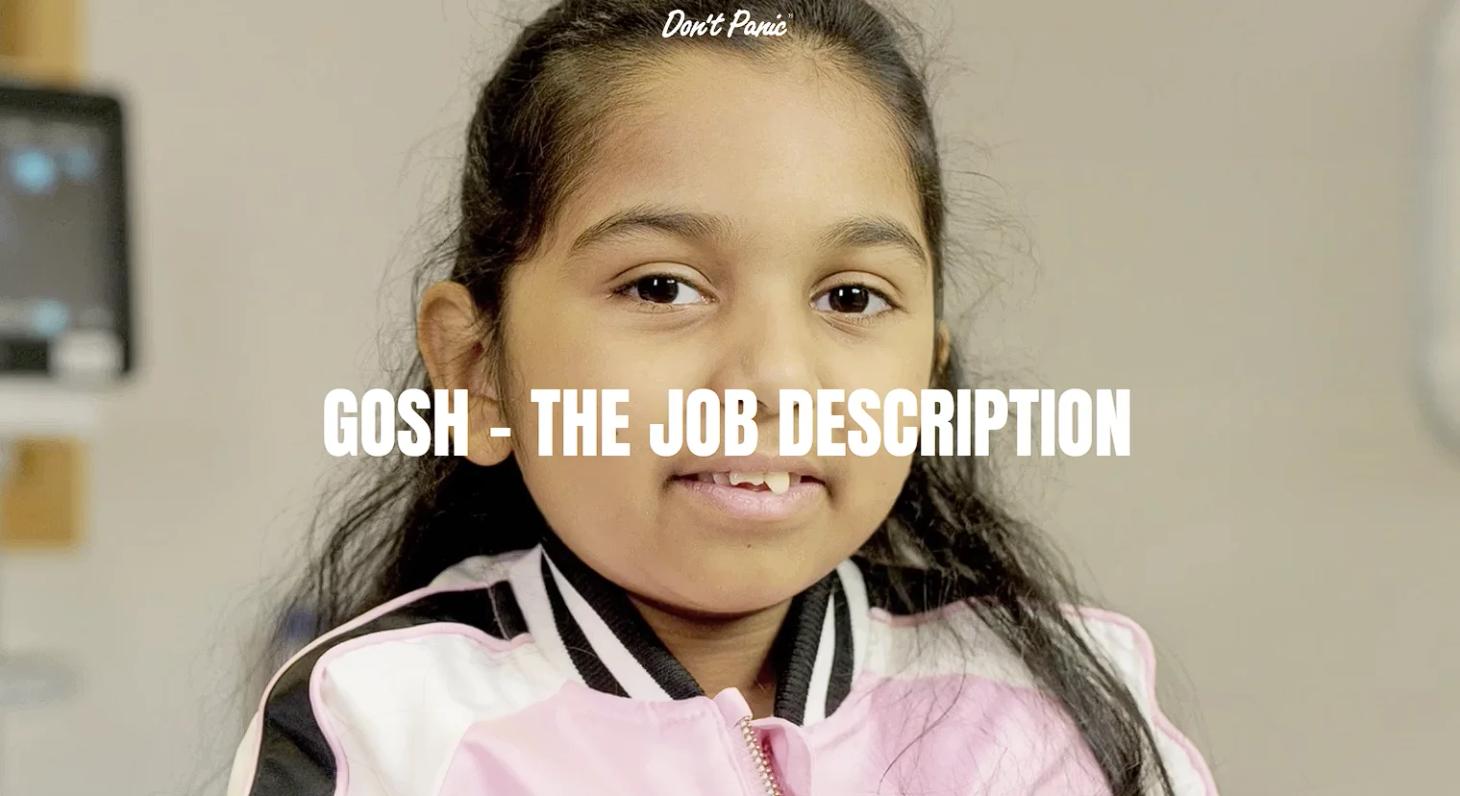
Legacy gifts make up around a third of GOSH Charity's fundraising. But they didn't have a legacy campaign that cut through.
We asked the children themselves what makes someone special. Their answers were funny, surprising, moving, and they became the job description for leaving a legacy gift. Shot documentary-style with real patients and families, the 60-second film reframed legacy giving as a role anyone can take on.
The campaign ran through TV, digital, and social. We shifted the language from "when you're gone" to "the work you'll keep doing." Future-facing imagery showed children thriving, breakthroughs happening, hope continuing. No funeral cues. No death talk.
The result: GOSH Charity's first iconic legacy campaign that positions leaving a gift in your will as life-affirming rather than morbid.
The learning: Put beneficiaries' voices at the heart. People respond to impact, not mortality.
WaterAid - "What Jack Gave"
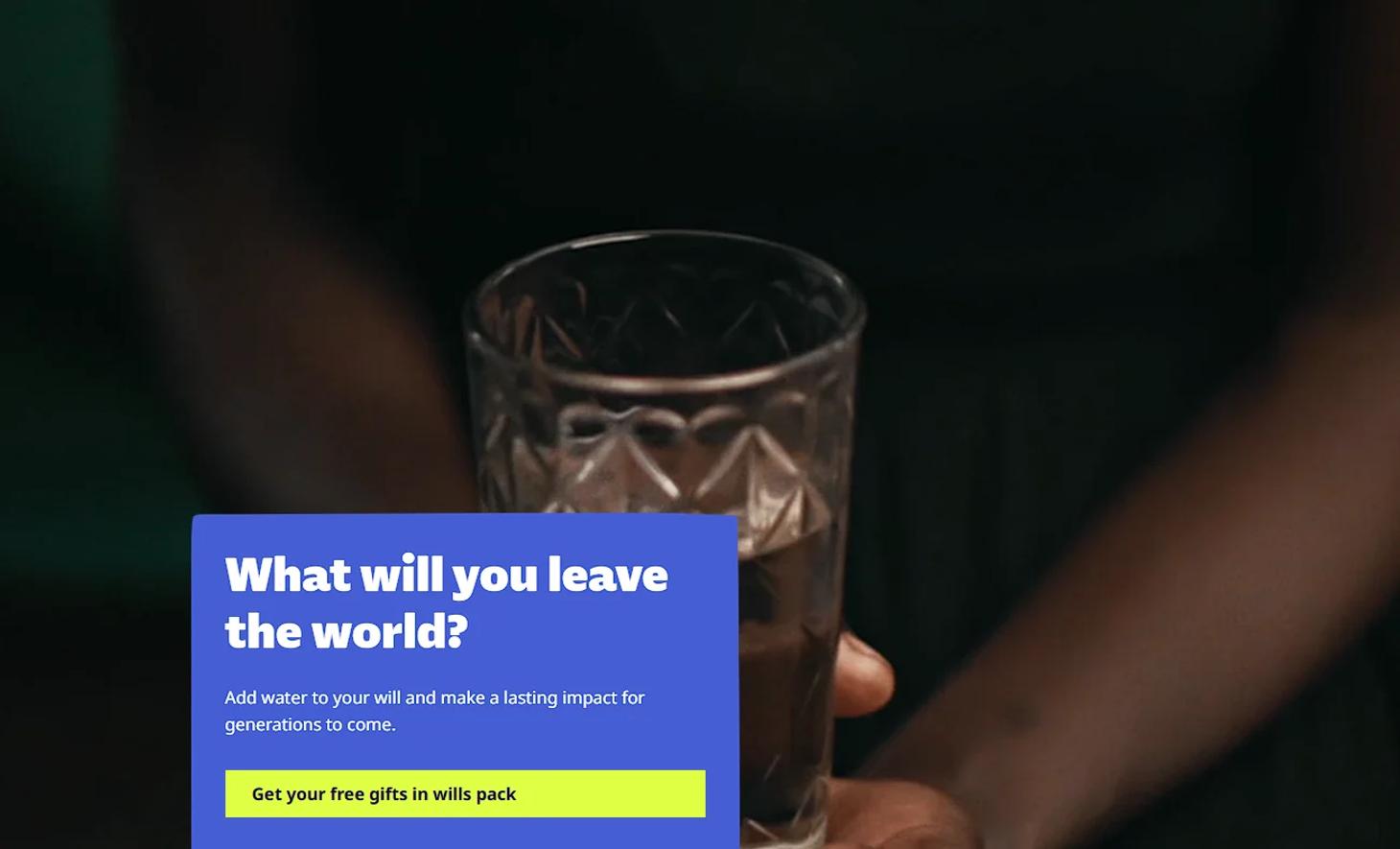
The challenge: almost half of WaterAid's legacy gifts come from people not known to the charity. To reach beyond existing supporters, we needed TV.
We created WaterAid's first-ever legacy TV advert. The film centred around mementos - the objects that Jack's had given to his family to remember him by. Then we see a woman from Zambia with a glass of clean water. The lens widened to show the impact of his gift on people Jack never met.We cast people who could call on their own experiences. Caroline, who opens the film, talks about her late husband. This authenticity gave the film emotional power that a fictional script couldn't achieve.
The core message: "Jack didn't meet everyone in this film, but his life meant something to all of them."
The result: Legacy income at WaterAid grew from £2.2m ten years ago to £10.2m in 2021-22, with projections to double again by 2030. The campaign was shortlisted at The Drum DADI Awards.
The learning: Stories sell legacies better than data. Show the future their gift creates. Cast people with lived experience - authenticity lands harder than fiction
“Working with Don’t Panic brought a completely fresh perspective to legacy advertising and enabled us to create something powerful, something that captures what legacies really are about the love we have for others.”
- Dom Abranson, Legacy and In Memory Lead at WaterAid
FAQs
When is the best time to run legacy awareness activity?
Always! Legacy marketing needs to be always-on, with extra emphasis around life-stage moments and when your cause is front-of-mind. Visibility needs to be consistent year-round.
How do you measure a legacy marketing campaign?
Track guide downloads, enquiry volume, pledges, page engagement, stewardship quality. Success means building a pipeline who'll convert by 2030-2035. Don’t focus on income received.
Is legacy marketing ethical?
Yes, when done right. Give supporters full control, provide clear information without pressure, respect privacy, ensure loved ones come first. Never pressure, never manipulate, always be transparent.
How long does it take to see results?
Expect 6-10 years for meaningful income. Progress shows sooner: rising enquiries within 6-12 months, growing pledger cohort within 2-3 years, first gifts by year 5, reliable revenue by year 10.
Your Pipeline Could Take 10 Years. You Shouldn’t.
The landscape is clear: legacy income hit £4.5 billion, up 9% year-on-year. Bequests are rising faster than deaths. Baby Boomers are entering their peak giving years. The market will reach £5.1 billion by 2030.
Securing that income requires investment now. Charities that go the extra mile to embed legacy into their culture, build robust stewardship, and measure the growth of their pipeline will be the ones with a more secure future.
Consider this: the people who'll leave you a gift in 2035 could be reading your website right now. Give them a reason to act.
Ready to build a legacy programme that secures your mission? Don't Panic works with charities to build creative legacy marketing strategies that earn trust, drive enquiries, and deliver long-term impact. Get in touch today.