




Most ads try to make people think. The ones that work hit people in the feels. That’s emotional advertising. When it's done properly, it sticks. It shapes memory, shifts behaviour, and drives sales.
Consumer insights platform Zappi studied thousands of ads in 2025 and found a simple pattern: adverts that hit harder emotionally were about twice as likely to trigger an immediate sale. That lines up with what we see when we test and build campaigns: when the feeling lands, the message travels, and the action follows.
Done badly, though? It feels performative. Manipulative. Like someone added sad piano music and shouted “Strategy!” while doing jazz hands and smoking a cigar.
Here's the useful version: what emotional advertising is, why it works, how to do it without the cringe, and examples that show what to learn.
Quick takeaways
- Pick one emotion and commit. Half-funny, half-sad lands nowhere.
- Start with audience truth, not brand claims. People don’t cry over taglines.
- Give the feeling a story spine (feel → think → do). Emotion needs direction.
- Use guardrails. If it feels exploitative, it is.
- Measure more than views. Emotional impact shows up in memory and behaviour (not just clicks).
What is emotional advertising?
Emotional advertising is advertising designed to trigger a feeling first, then use that emotional response to shape decision-making and drive action.
Making an emotional connection is the biggest driver of why people say they like an ad. It drives brand recognition and boosts sales, and it’s why we target people’s feelings with our work.
It’s not automatically sad, though. It can run on positive emotions like joy, pride, belonging, nostalgia, humour, or on powerful or negative emotions like fear, anger, urgency. The point is that the emotional response leads the message and shapes the response.
Emotional appeal vs emotional advertising vs emotional branding
Emotional appeal advertising uses one dominant emotion as the main persuasion lever - feel this, then do that. Fear appeals drive urgency. Belonging appeals drive sharing. Pride appeals drive identity.
Emotional advertising is the broad approach of using emotion (often through story, character, tension and release) to make people care, and then making the next step easy.
Emotional branding is the long game: building consistent meaning and experience over time, so people don’t just recognise you, they feel something about you.
One great emotional ad can open the door. Emotional branding keeps people walking back through it.
Don’t Panic’s POV: think → feel → do
A lot of marketing advice treats it like it’s linear: “say the thing, people believe it, they act.” We’ve known since the 80s that real life doesn’t work like that. People don’t buy because they’ve been convinced. They buy because something connected with them. Then they justify it later.At Don’t Panic, we use marketing behavioural science to guide how we write scripts, shoot ads, build hype, and it plays a big part in how we build each campaign strategy.
Our lens is simple:
- Feel opens the brain (attention + relevance)
- Think gives it meaning (interpretation + belief)
- Do makes it real (behaviour + choice)
Good emotional advertising doesn’t skip the “think”. It just understands the order.
Keep that spine in your head as you build: feel → think → do.
Before you start: get these straight
If you skip this, the only tears you’ll get will be of boredom. These are the questions we ask in kickoff — because they save weeks of rework later:
- What’s the audience truth? What they really fear/want/avoid (not what your brand wishes they felt). We prefer to start with consumer insights rather than guesswork.
- What’s the primary emotion? The main reaction you're building towards
- What’s the main success signal? What "good" looks like and how you'll measure it
- What are the guardrails? What you won't do for attention
- What’s the channel context? Social doesn't behave like TV; billboards don't behave like TikTok
If you don’t have answers to these, you’re not ready to “get emotional”. You’re ready to get vague.
How to choose the emotion to target
Picking an emotion isn’t about vibes. It’s about matching a feeling to the behaviour you need.
If you need people to act now (high urgency)
Choose fear, urgency, consequence. Works best when the situation is specific and relatable, not abstract.
If you need people to join or share (social spread)
Choose joy, belonging, humour, pride. Works best when the audience feels seen and has an easy action that signals identity.
If you’re building for spread, start with how to create shareable content and the role emotional engagement plays in getting people to pass it on.
If you need long-term loyalty (brand building)
Choose warmth, nostalgia, hope, care. Works best when the brand behaves like the feeling it claims.
If you need mobilisation (cause/action)
Choose anger, injustice, empathy, solidarity. Works best when you pair emotion with agency (a clear "do") instead of leaving people overwhelmed.
How to do emotional advertising right
1) Start with the audience (feel)
Your audience is the main character. Not your product. Not your mission statement.
Find the tension behind the behaviour you want: what’s stopping people? What are they telling themselves? What do they already feel but rarely say out loud?
Then tell the true thing they recognise.
If people reject emotional ads, it’s rarely because they’re emotional. It’s because they’re untrue.
2) Make the feeling singular (feel)
Emotion isn’t decoration. It’s the strategy.
Pick one lead emotion and commit across everything: tone, pacing, casting, edit, music, copy. If your emotions fight each other, the audience checks out.
Half-funny, half-heartbreaking usually lands as neither. Just confusing.
3) Give the emotion a story spine (think)
If emotion is the spark, story is the oxygen.
A simple spine works:
- Set-up: a recognisable truth
- Tension: what’s at stake
- Shift: the moment it turns (reveal/reframe/surprise)
- Action: what you want people to do, and why it matters
This is where emotional effectiveness lives: not in how intense the feeling is, but in whether the feeling turns into meaning. That’s not just creative folklore. Research on narrative transportation shows that when people get absorbed into a story, it can stop people arguing with you in their head and move them towards a decision.
4) Earn trust and give emotion direction (think → do)
People smell exploitation instantly. Once trust goes, it doesn't come back.
Red flags: using suffering as a prop, emotions that don't match brand behaviour, generic insights, guilt-based CTAs, chasing tears because they look like "impact."
If you're using real stories, consent and dignity aren't legal boxes. They're the brief. If your campaign touches values, identity or culture, it’s worth getting clear on what counts as brand activism (and what backfires).
Then give the feeling somewhere to go:
- One specific action (not five)
- A decision people can picture making
- A benefit that's clear to them, not you
The best emotional ads don't just move people. They give them somewhere to put the feeling.
Measuring emotional advertising: the metrics that matter
If you want to prove emotional impact and improve performance next time, plan and measure in three phases:
Before launch: set your success metrics
- What’s the message takeaway you want repeated?
- What’s the emotion you want reported in testing (one lead emotion)?
- What behaviour defines success: purchases, sign-ups, donations, retention?
Emotional advertising often earns its keep later via brand loyalty as much as it does by driving clicks. Plan for both.
During launch: read the room properly
Here are some KPIs and metrics to keep an eye on to see if your emotional ads are landing:
- Video completion rate (Completion rate benchmarks vary massively - compare vs your baselines/category norms; watch for drop-off points)
- Share rate (shares per 1,000 views, benchmark against category average)
- Engagement rate (comments + shares + saves / impressions × 100)
- Sentiment analysis (positive vs negative comment ratio)
- Branded search uplift (% increase in brand name searches during campaign)
If the audience is repeating your message in their own words, you’re winning. If they’re repeating your headline back at you, you’re not.
After launch: prove emotional effectiveness
Look at:
- Aided brand recall (% who remember your ad when prompted)
- Unaided brand awareness (% who name your brand first in category)
- Brand consideration lift (% increase in "would consider buying")
- Conversion rate (sales, donations, sign-ups vs benchmark)
- Customer lifetime value for those exposed to the campaign vs a control group
- Net Promoter Score change (before/after campaign measurement)
Emotional advertising earns its keep when it changes what people remember and what they do next.
Emotional advertising examples (with what to steal)
Nine campaigns (some our work, some others that we think are great). Nine different approaches. Same principle: make people feel something real, then give them somewhere to put it.
We’ve used this same principle across our charity and purpose work - including campaigns for Shelter, Oxfam, Barnardo’s and Mencap.
Don't Panic x Mencap "Be The Yes"
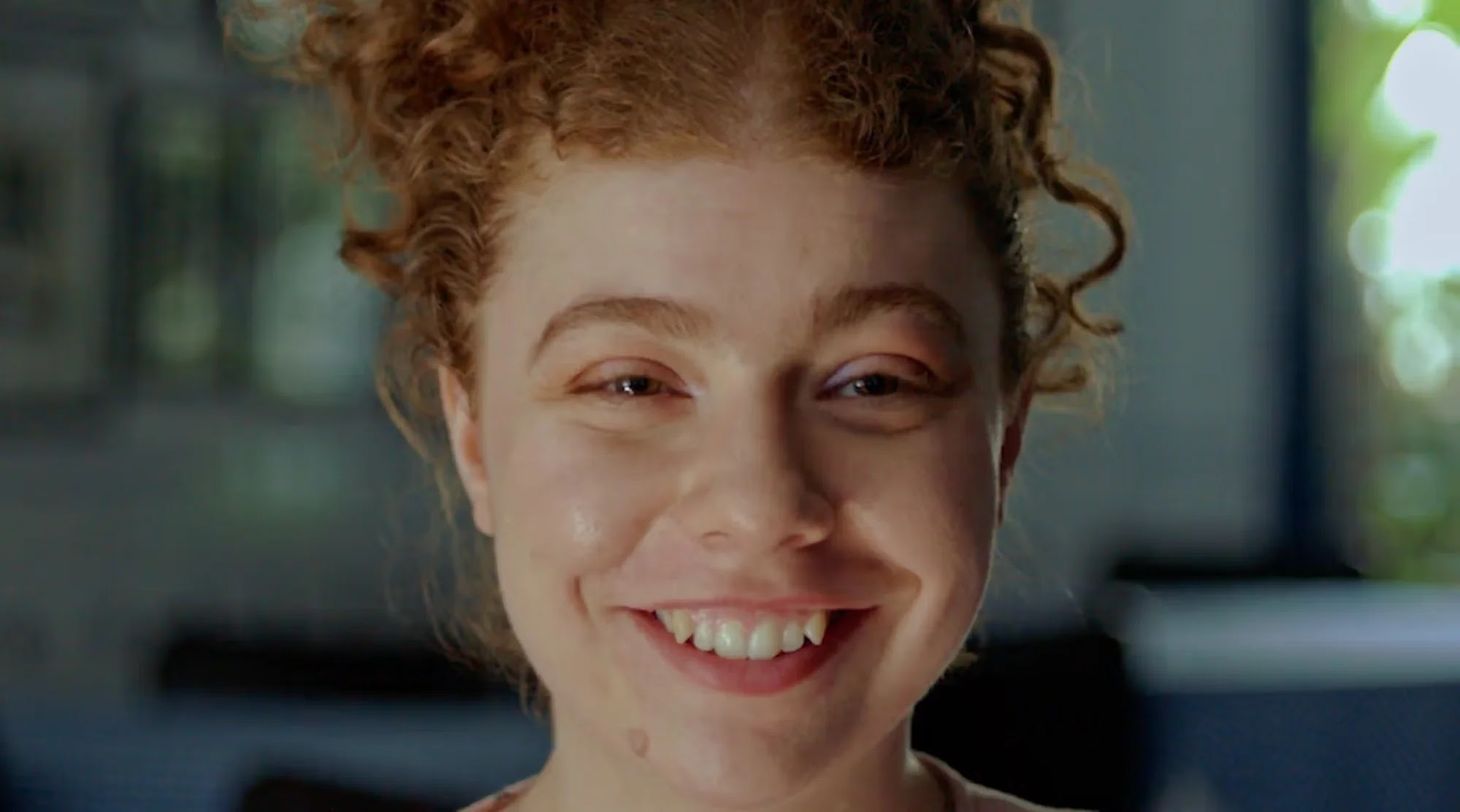
The emotion: Frustration, then hope
Inclusion isn't an abstract. It lives in a thousand daily decisions, and "no" leaves a mark. Our "Be The Yes" campaign told a real story with emotional precision, showing how people with learning disabilities face repeated rejection, then made "yes" a concrete action people can choose.
Why it worked: It bridges empathy to agency. That's how emotion becomes action and long-term support.
What to steal: Convert frustration into hope by giving people something specific to do to make a change. Emotion without action just sits there.
John Lewis Christmas adverts

The feeling: Warmth, nostalgia, connection
You know what you're getting with John Lewis’ Christmas adverts: tenderness, nostalgia, love. And it works every year because the human truth is simple: at Christmas, people aren't shopping for products. They're shopping for meaning and connection.
John Lewis builds cinematic storytelling anchored in relationships, with product as a gentle proof point rather than the star. The emotion arrives first, meaning follows, and the brand gets attached to the feeling in memory.
Why it worked: That's building brand loyalty at scale. The brand becomes the facilitator of emotional moments that people remember.
What to steal: Let feelings do the heavy lifting. When the emotion is strong enough, the product can stay in the background.
Don't Panic x Barnardo’s "Mollusc"

The emotion: Protectiveness, sadness, recognition
Withdrawal isn't "bad behaviour." It's often survival. Our "Mollusc" campaign for Barnardo’s used a simple metaphor (a child retreating into a shell like the eponymous mollusc) to show the emotional reality of self-protection in vulnerable children.
Why it worked: No spectacle, no exploitation. Just clarity with weight. That's how you earn trust in social impact work.
What to steal: Use metaphor to make complex emotion immediately understandable. Clarity builds protectiveness without manipulation.
Coca-Cola “Share a Coke”
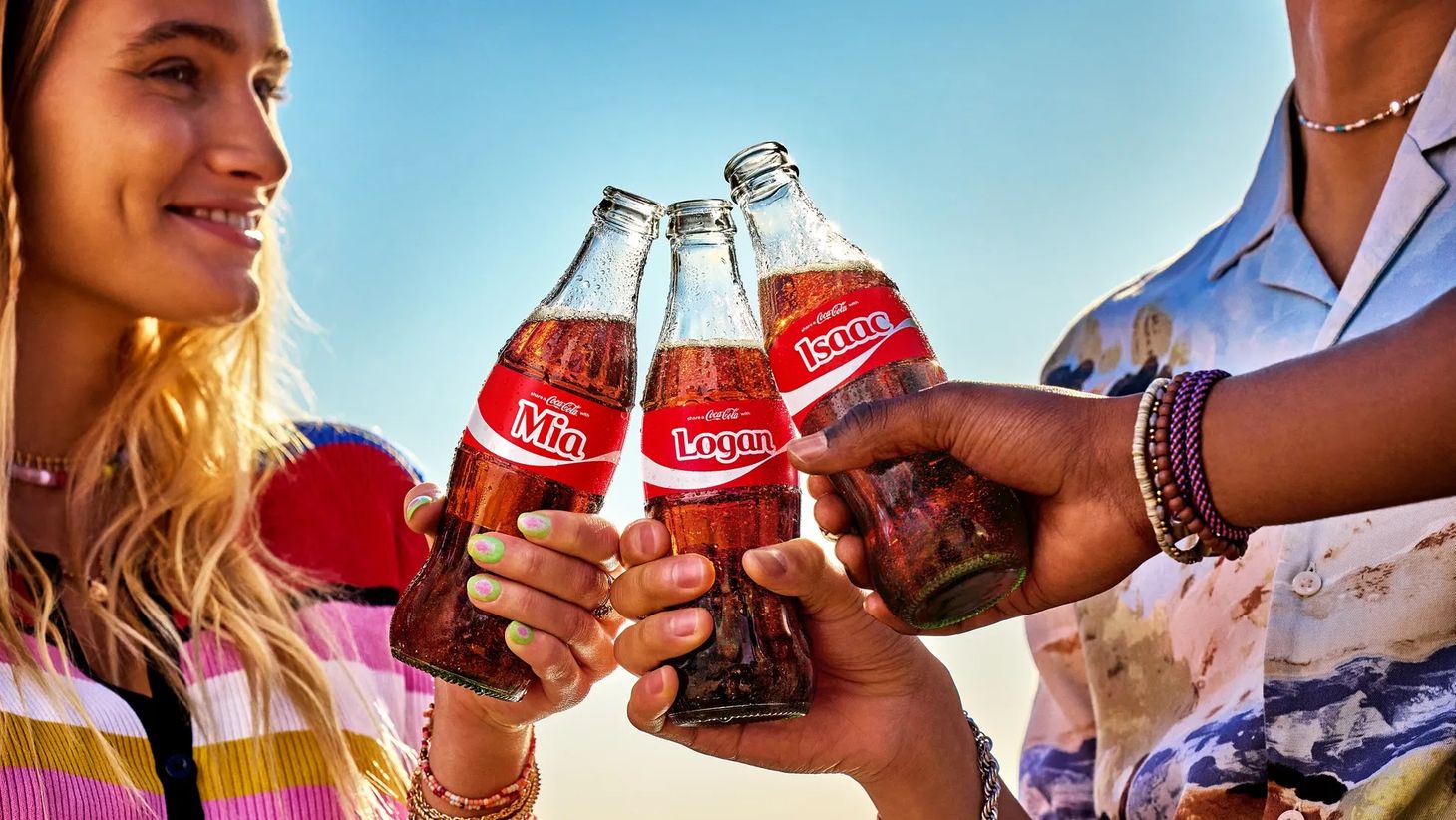
The feeling: Belonging, recognition, play
While we don't endorse them as a brand, Coca-Cola's "Share a Coke" campaign made its packaging the vehicle for emotional connection by adding names and phrases like "Friend" and "Soulmate." People hunted for bottles with their names, bought them for friends, and shared photos. The feeling was baked into the action.
Why it worked: You don't just watch it, you do it. That's feel → do with almost no friction.
What to steal: Turn the product into the emotional trigger. Make buying it feel like connection, not consumption.
Don't Panic x Shelter "Brave Face"
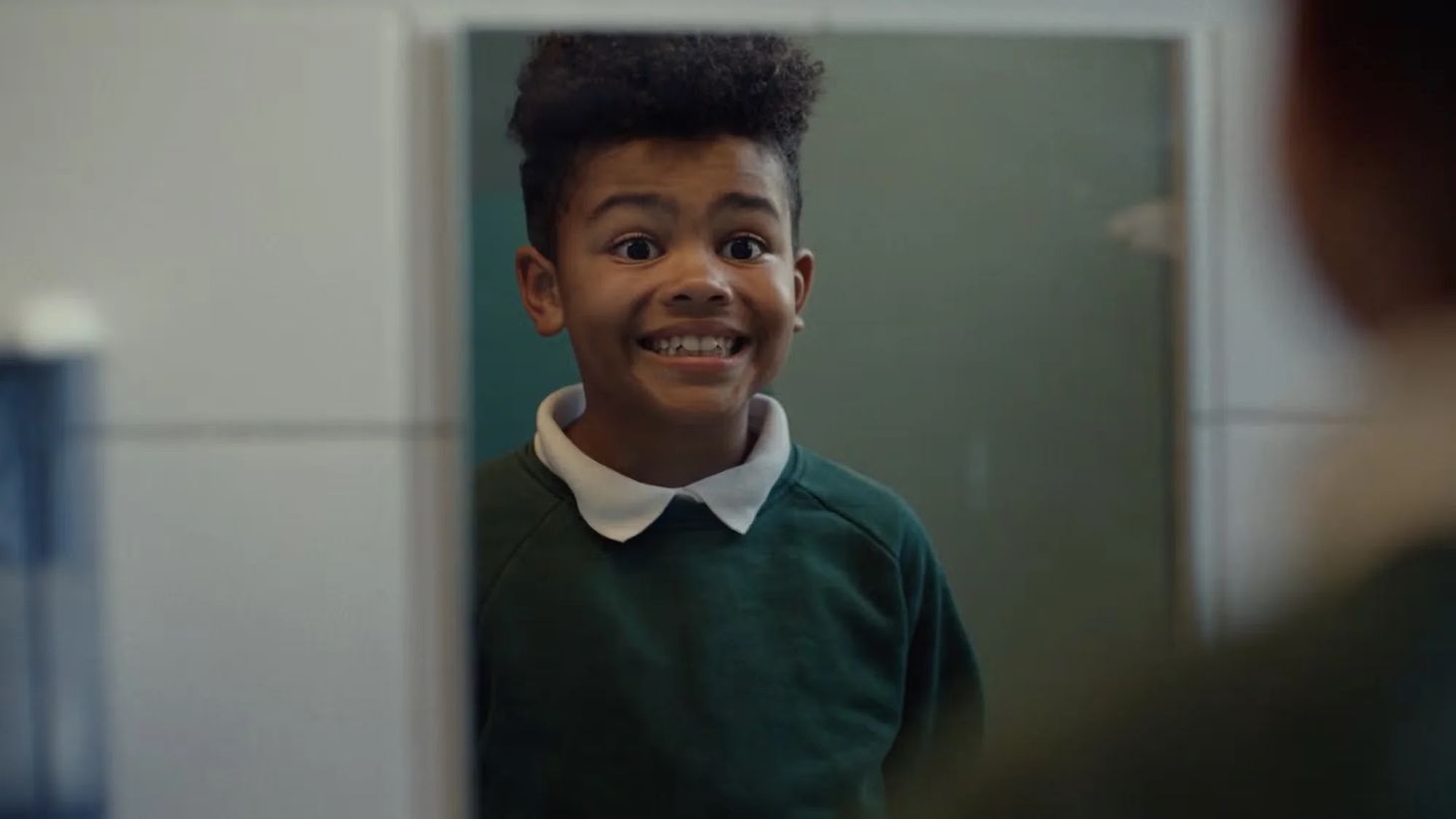
The feeling: Empathy, protectiveness, sadness
In our "Brave Face" ad for Shelter, you meet 8-year-old Jayden having a normal day. A kid quietly practising being fine at school. Little knocks. Small humiliations. Then the truth lands: he's living in temporary accommodation, and that brave face isn't a moment in his day. It's survival.
Why it worked: It made you care about the child before revealing the problem. Empathy through identification, not pity.
What to steal: Build empathy before revealing the problem. Once people care about the person, they can't ignore the cause.
Dove “Real Beauty Sketches”

The feeling: Vulnerability, relief, self-recognition
For Dove’s "Real Beauty Sketches", a forensic artist draws women based on their self-descriptions, then draws them again based on strangers' descriptions. The difference is striking.
People are harsher on themselves than anyone else is, and the experiment format lets the insight emerge naturally rather than being told. 50 million views in 12 days would indicate this one landed.
Why it worked: It didn't lecture, it revealed. The audience completed the emotional arc themselves, which is why it stuck.
What to steal: Use structure (before/after, self vs others) to reveal something people feel but haven't articulated and use that to trigger the emotion.
Don't Panic x Oxfam "Stay in the Fight"
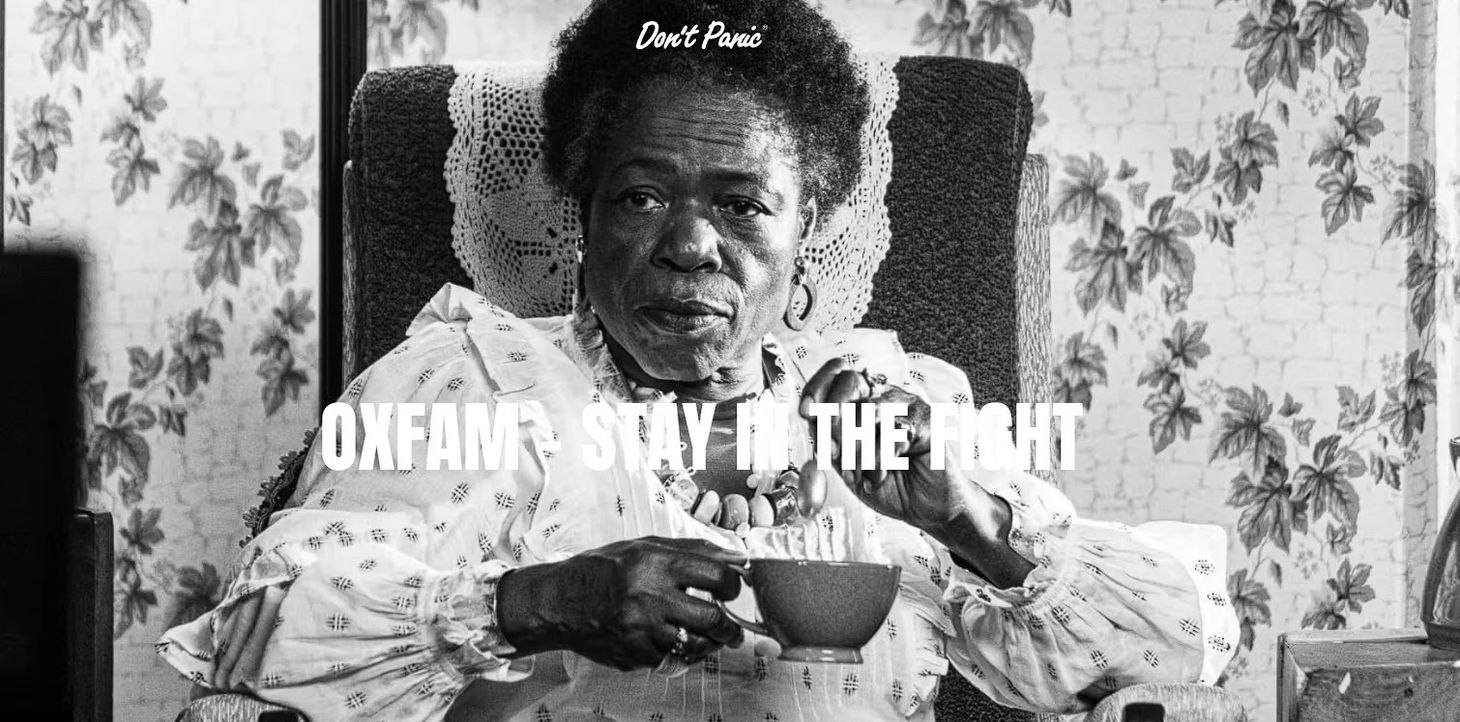
The feeling: Pride, conviction, solidarity
Legacy campaigns often talk to older people like they're fragile. Our "Stay in the Fight" campaign doesn't. It treats them like what many of them are: the original protest generation. The story moves between a grandmother's memories and present-day climate activism, reframing legacy giving as continuing the fight, not "leaving something behind."
Why it worked: It honours lived experience and gives legacy marketing a sharper identity: not charity, but solidarity.
What to steal: Replace pity with pride. When you honour what people have already done, asking becomes an invitation, not a guilt trip.
Always “#LikeAGirl”
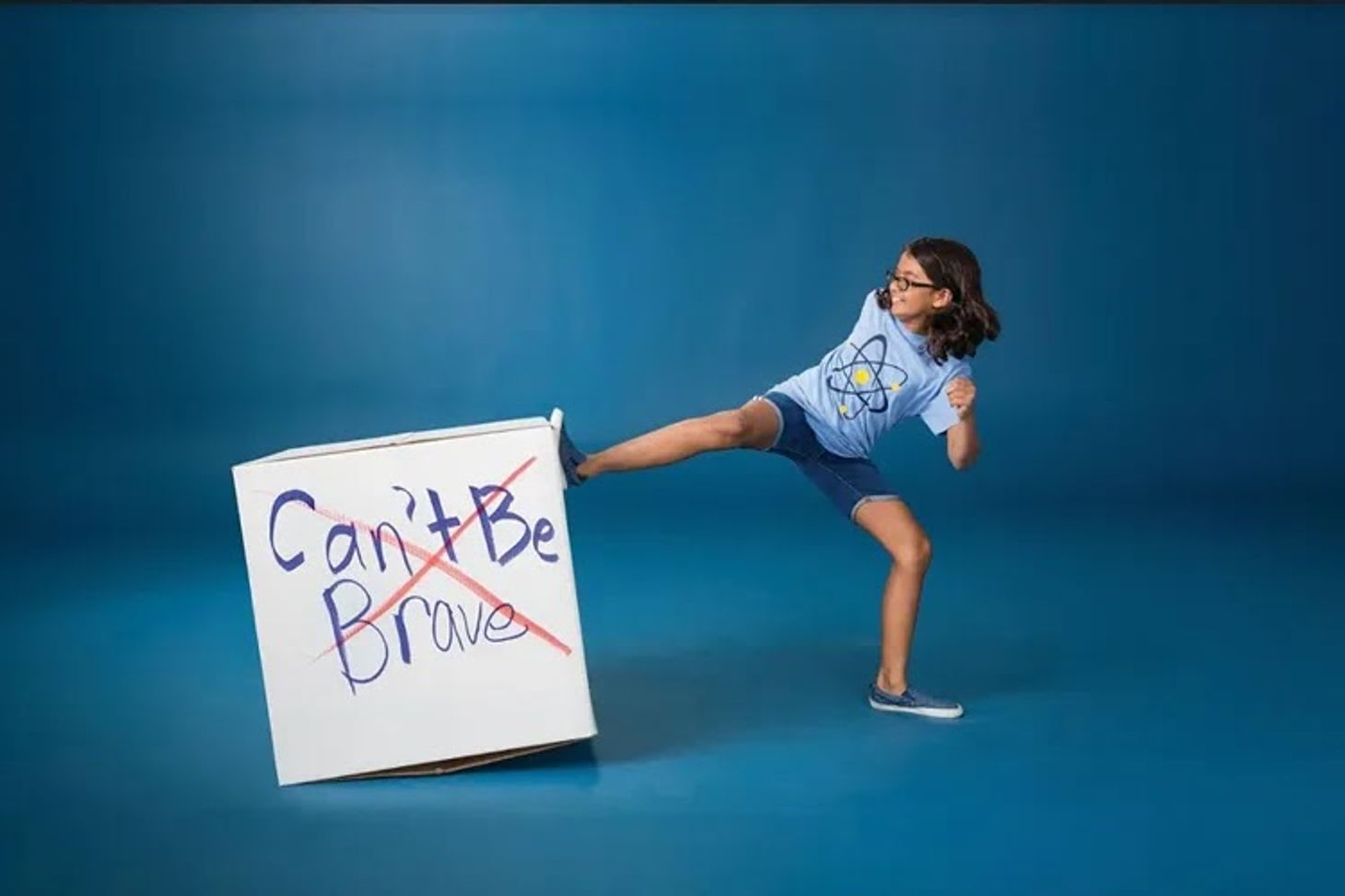
The feeling: Pride, defiance, self-worth
Always’ “#LikeAGirl” campaign asked young girls (pre-puberty) to show what "run like a girl" means. They ran fast, with effort and determination. Then it asked teenagers and adults the same question, and they mockingly acted out weakness and silliness.
The contrast revealed when it becomes an insult in people’s minds. Then it challenged viewers: what if "like a girl" meant strength all along?
Why it worked: It took a phrase people accepted as an insult and turned it into a choice. The reframe was simple enough to spread but powerful enough to shift how people saw themselves.
What to steal: Make your audience the hero of change. When the emotion leads to "I can fix this" not "they should fix this," it drives action.
THINK! “Drink a little, risk a lot”
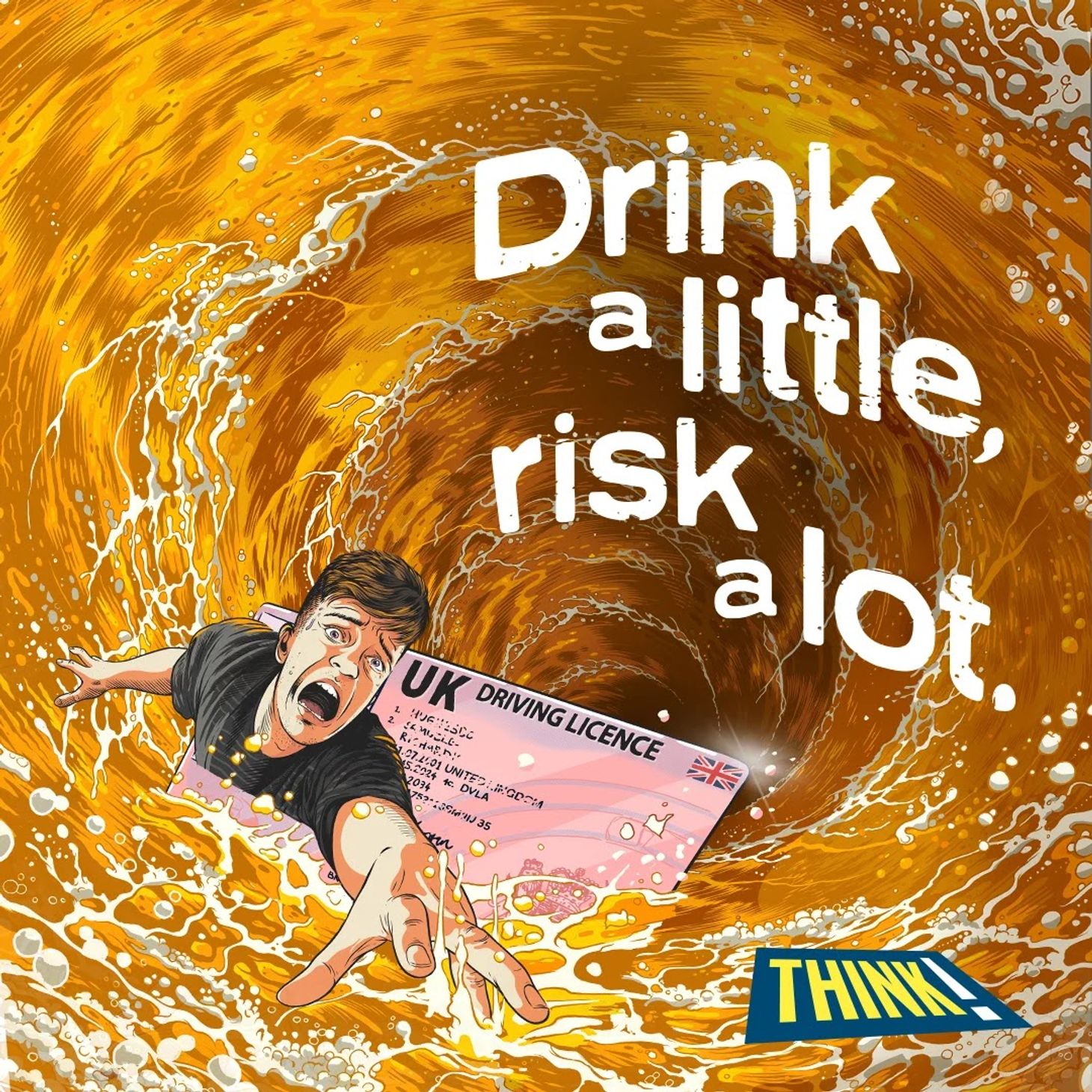
The feeling: Dread, consequence, regret
No one sane ever plans to drink and drive. They slide into it through excuses, justifications, and thinking "I'll be fine just this once." THINK!’s campaigns, like “Drink a little, risk a lot”, always make the consequences feel immediate, personal, and close enough to a real night out that you can smell the stale beer and sweat.
It doesn't scare you with statistics. It scares you with a situation you can picture, then gives you a way to avoid it.
Why it worked: Specific fear is believable fear. Abstract danger doesn't move behaviour. Recognisable situations do.
What to steal: Fear only works when people can picture it happening to them. Make it personal and specific.
Patagonia "Don't Buy This Jacket"
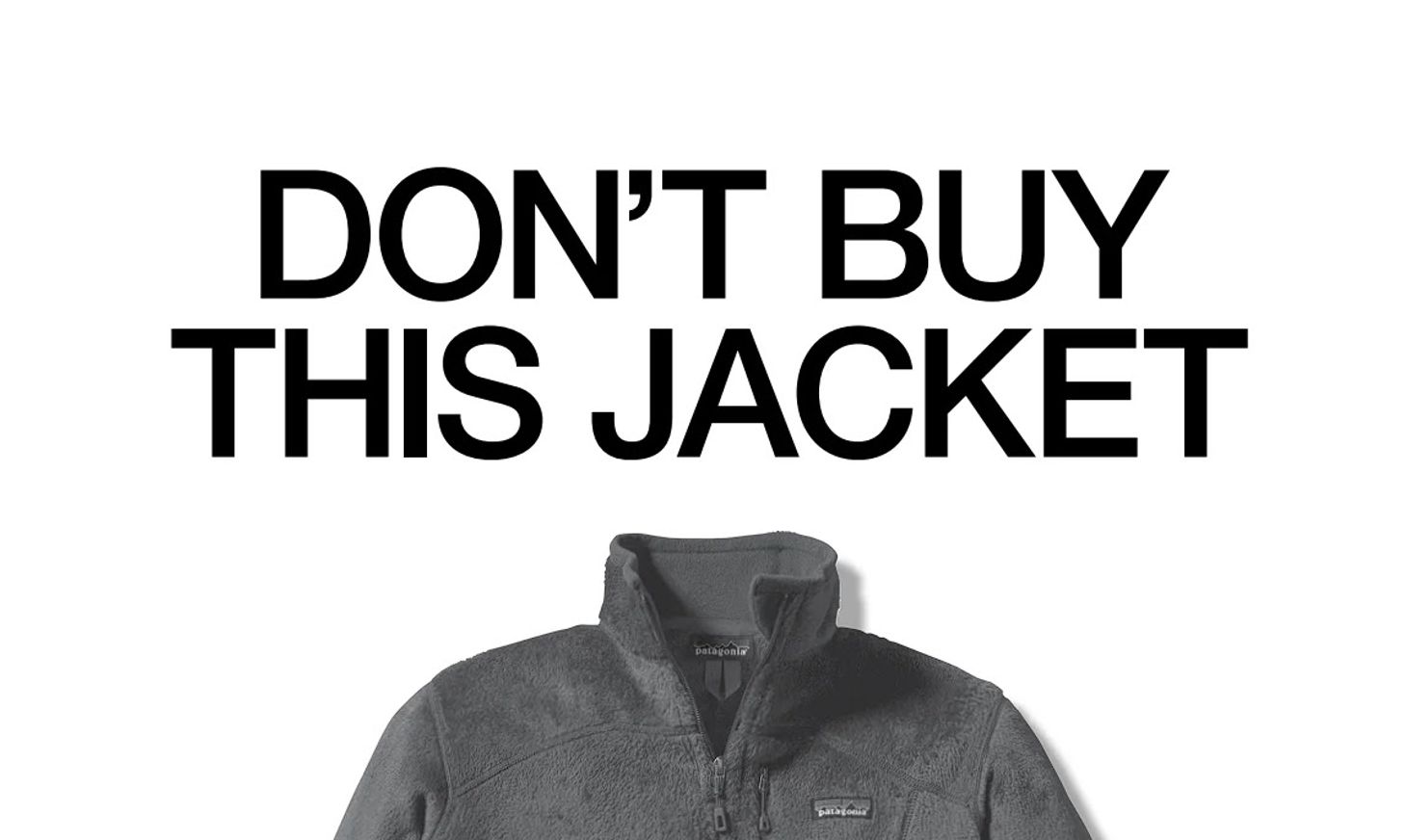
The feeling: Responsibility, urgency, respect
Patagonia ran a full-page ad in The New York Times on Black Friday telling people: “Don’t Buy This Jacket”. The ad detailed the environmental cost: 135 litres of water, 20 pounds of CO₂, and two-thirds of the jacket's weight lost to waste. It challenged customers to think twice about consumption during the biggest shopping day of the year.
Why it worked: Their entire business model backs the positioning: lifetime repairs, 1% of sales to environmental causes, transparent supply chain. Sales increased 30% in the 9 months after the ad. The honesty built trust.
What to steal: Use people’s sense of responsibility as the emotion, but only if your actions back it up. Asking people to care only works when you clearly do.
Emotional Advertising FAQs
What’s the difference between emotional advertising and emotional marketing?
Emotional marketing is the wider umbrella (social, email, experience, community). Emotional advertising is a campaign message designed to create an emotional response at a specific moment in media.
Does emotional advertising work better than rational messaging?
Often, yes, for brand-building and memory. Rational messaging can be brilliant for short-term activation. The best work knows which job it’s doing.
What are common emotional triggers in advertising?
Joy, nostalgia, pride, belonging, hope, fear, anger, urgency, guilt, humour. The trick isn’t picking one, it’s picking the right one for your audience truth and cultural context.
How do you know when an emotional ad is “cringe”?
When the emotion doesn't match the brand's actual behaviour, or when you're trying so hard to be relatable that it feels forced. In 2026, cringe happens when brands use obvious AI fakes, exploit social issues they don't understand, or try to draw out emotions they haven't earned. If people share your ad to mock it, it’s cringe.
Make emotional advertising work for your brand
Emotional advertising isn’t about making people cry. It’s about making people care in a way that feels honest.
Start with a real audience truth. Choose one emotion. Give it a story spine. Use guardrails. Measure what matters. Stick in their heads.