




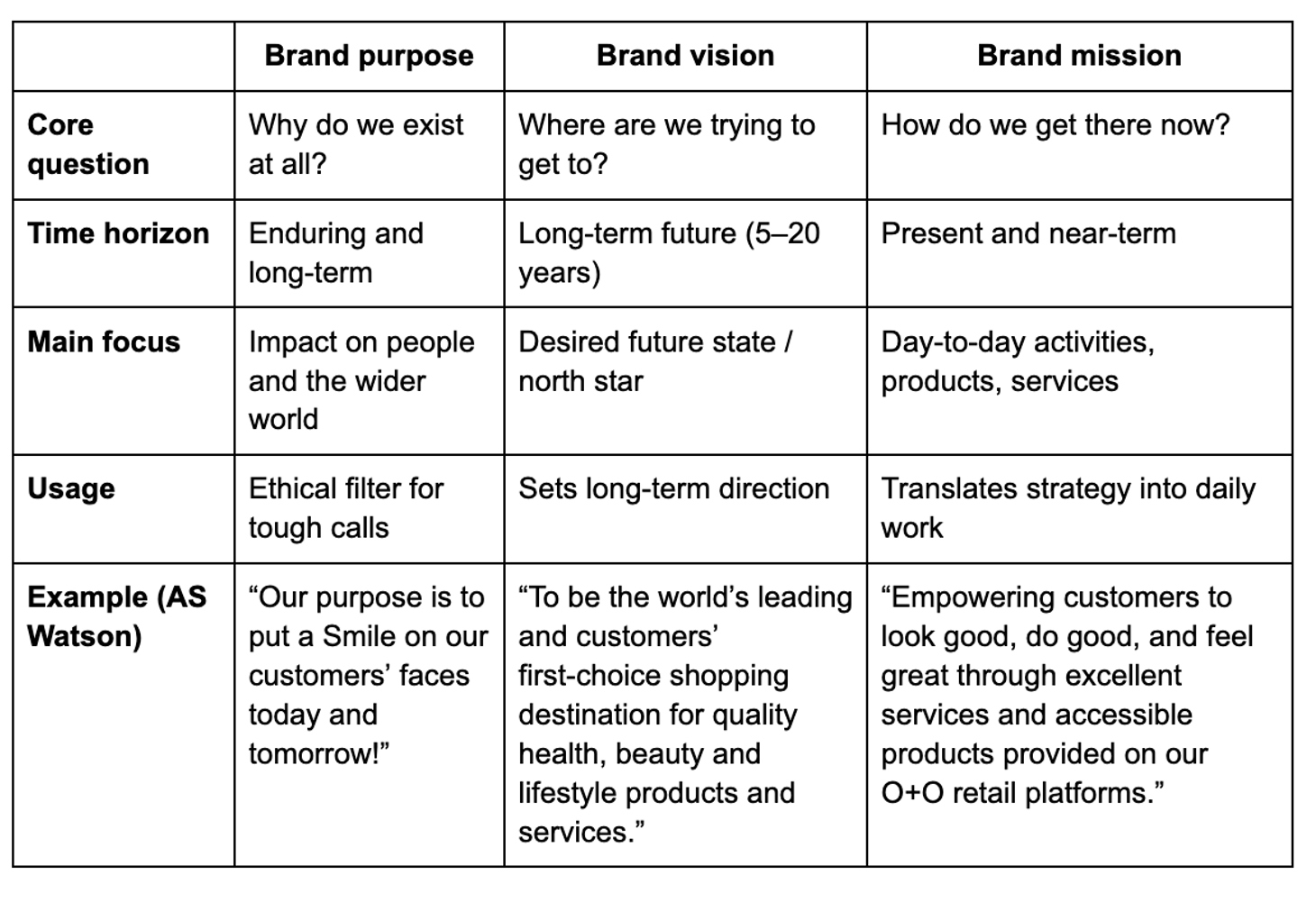
Brand purpose is why your company exists beyond profit. Brand vision is the future you’re working towards. Brand mission is what you do today to get there. In short: purpose is your “why”, vision your “where”, and mission your “how”.
Most brands blur those concepts together. They swap the words around, bury them in buzzwords, or write statements so generic they could belong to anyone. The result: confused teams, vague positioning, and customers who have no clue what you actually stand for.
Purpose, vision and mission stopped being optional when 73% of consumers started checking what brands stand for before they buy, and started walking away if it was fuzzy. Getting these statements right is now proof you’re worth their attention – and their money.
This guide breaks down brand purpose vs vision vs mission in plain English. You’ll get clear definitions, a side-by-side comparison, real brand examples, and a simple process to write your own.
TL;DR
- Purpose = Why you exist (timeless)
- Vision = Where you’re going (5–20 years)
- Mission = What you do today (present)
Brand Purpose vs Vision vs Mission: Quick Definitions
Brand purpose, vision and mission work together, but they are not the same thing
What is brand purpose?
Brand purpose is your “why” – the change you’re here to make for people, communities or the planet.
What is brand vision?
Brand vision is your “where” – the future you’re working towards.
What is a brand mission statement?
Brand mission is your “how” – what you do now, for whom, and how that moves you towards the vision.
Together, these three statements form your core vision and mission statements – the foundation of your brand platform. The hierarchy is simple:
- Purpose dictates vision.
- Vision dictates mission.
In theory, that’s neat. In practice, even big-name brands rarely publish all three clearly. They merge purpose and mission into one line, or talk about “mission and values” and never mention vision at all.
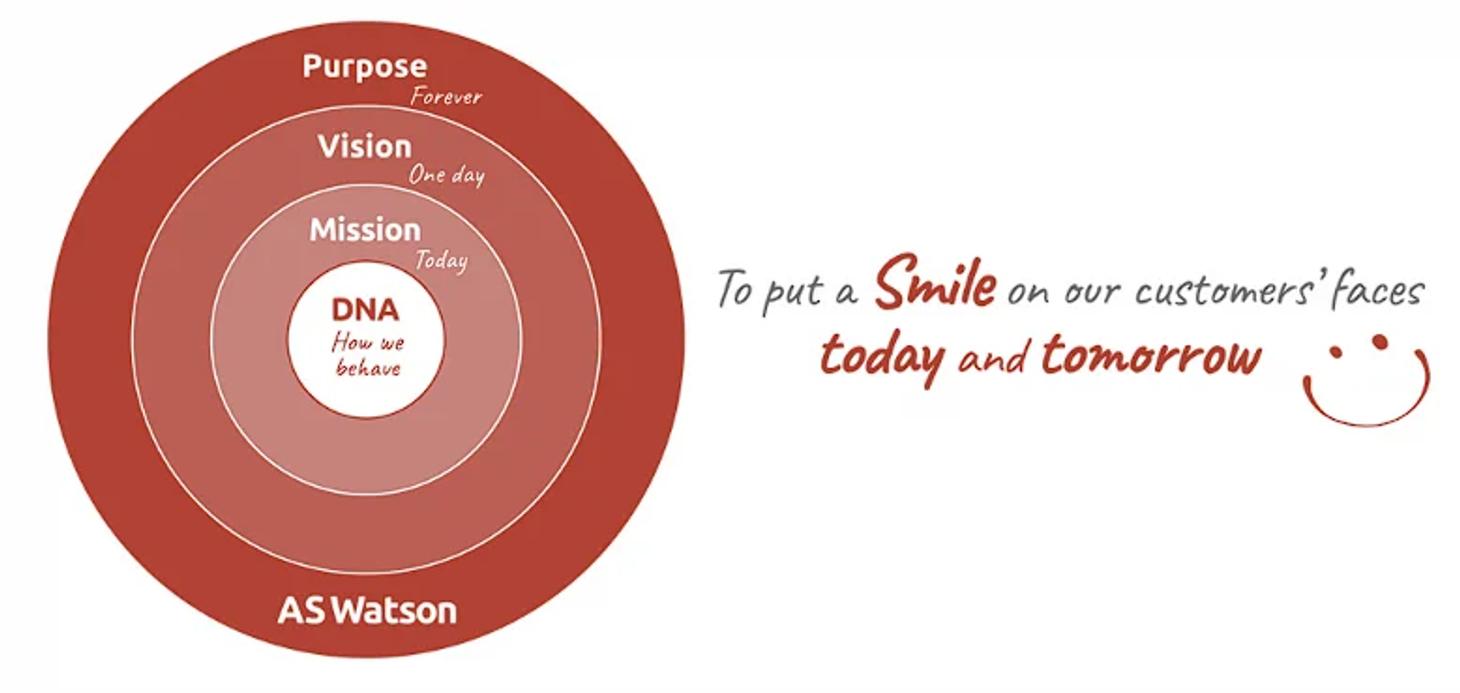
A rare exception is AS Watson Group (the health and beauty group behind Watsons, Superdrug and others), which spells out its purpose, vision and mission on one page in plain English. So we’ll use them as a touchpoint - it might not be the snappiest, but it does its job well.
Brand Purpose, Vision and Mission at a Glance
If you remember nothing else, use this to explain the difference to your leadership team in 30 seconds.
Brand Purpose – The “Why”
Brand purpose is the reason your company exists beyond profit. It’s the impact you want to have on people, communities or the planet. When it’s clear, it acts like a spine for everything else: strategy, campaigns, hiring, and the briefs you say no to.
Ask yourself:
“If we disappeared tomorrow, what meaningful gap would we leave in the world?”
That answer is closer to your purpose than any line about “leading the market”.
A brand purpose statement is a short, practical expression of your why. It should:
- Focus on impact for others, not just internal goals
- Be specific enough to guide decisions
- Be ambitious but believable for your size and sector
- Stay relevant over the long term
Real World Brand Purpose Examples
AS Watson Group
“Our purpose is to put a Smile on our customers’ faces today and tomorrow!”
AS Watson Group
Why it works:
- Starts with people, not the business. The job is simple: make customers smile.
- “Today and tomorrow” builds in both immediate experience and long-term trust.
- The wording is everyday. A store team member could say it without checking the brand book.
- It doubles as a filter: if a decision wipes smiles off faces, it fails the purpose test.
What to learn:
- Write a purpose line that your frontline teams can repeat in their own words.
- Tie it to a clear human outcome, not abstract value or “excellence”.
The Body Shop
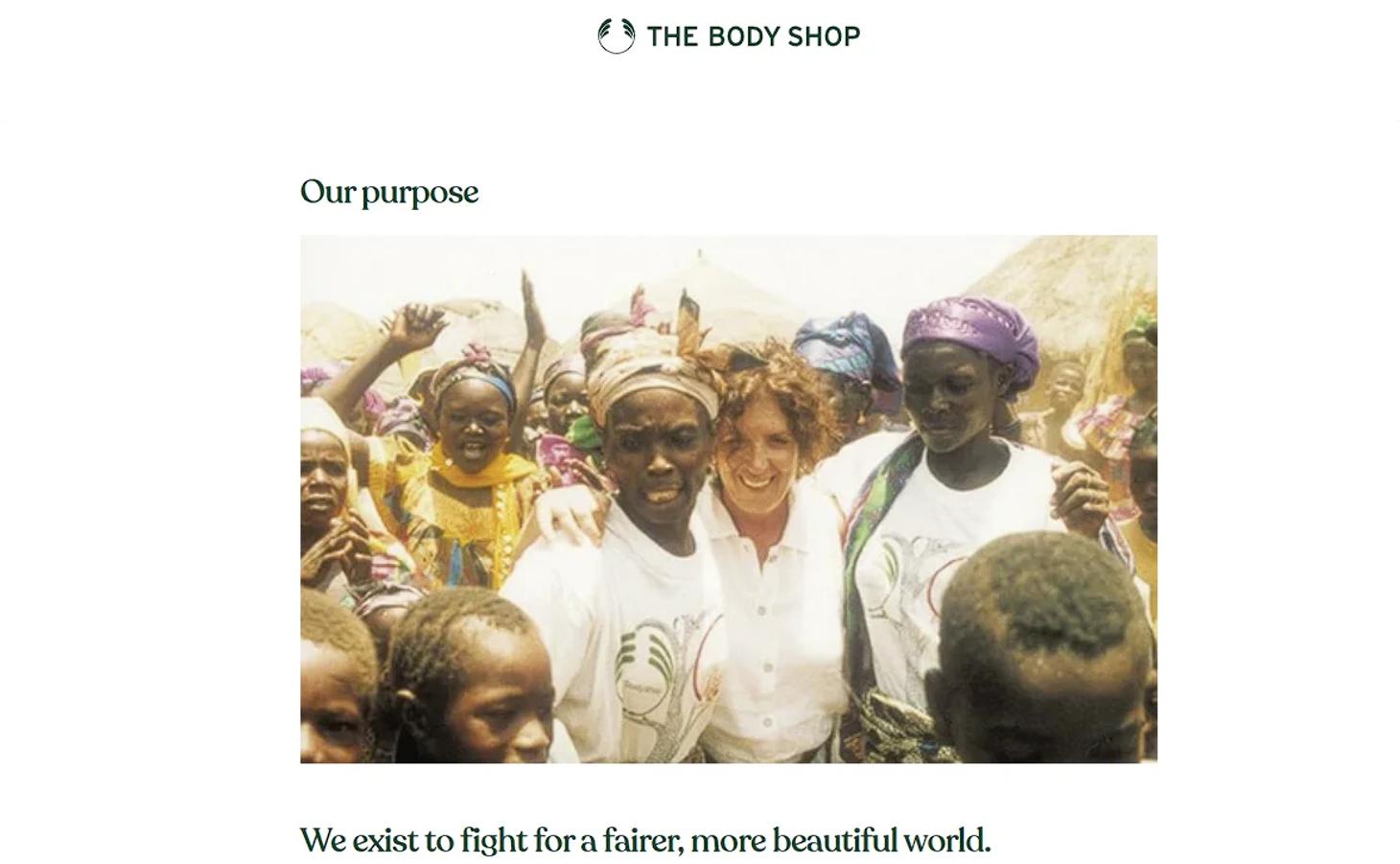
“We exist to fight for a fairer, more beautiful world.”
The Body Shop
Why it works:
- “Exists to” makes it unambiguous – this is the reason they’re here, not a slogan or campaign.
- “Fairer” points to ethics and activism; “more beautiful” anchors it in the beauty category in three words.
- “Fight for” adds tension. It implies something is wrong now and the brand is willing to do the work, not just “support” or “care”.
- It’s short and conversational, which makes it easy to repeat in everything from product copy to investor decks.
What to learn:
- Pair a moral word (“fairer”, “safer”, “more honest”) with a category word so your purpose doesn’t float off into vagueness.
- Use a verb that implies effort – fight, fix, change, protect – and then sense-check decisions against it: does this move really contribute to that cause?
Brand Vision – The “Where”
If purpose is why you exist, brand vision is where you’re going. It describes the future you want to create – for your business, your customers and the world around you.
A strong vision is:
- Long-term – a north star, not a quarterly OKR
- Ambitious enough to stretch the organisation
- Concrete enough that people can picture it
- Clearly growing out of your purpose
A brand vision statement is a short description of that future. It should answer:
- What kind of world are we helping to build?
- What will be different for our customers or community?
- What will we be known for when we get there?
Think of it as a headline from the future.
Brand Vision Examples
“To be the world’s leading and customers’ first-choice shopping destination for quality health, beauty and lifestyle products and services.”
AS Watson Group
Why it works:
- Spells out the mental slot they want: not just “leading”, but first choice.
- Names the category clearly: health, beauty and lifestyle products and services.
- You can see the path: from putting smiles on faces (purpose) to becoming the default destination.
- One line covers a complex portfolio without turning into vague “multi-brand synergies”.
What to learn:
- Use vision to say “this is the slot we want in people’s heads”, not just “grow a bit”.
- Test it on someone outside your team; if they can’t explain it back in one sentence, sharpen it.
Tony’s Chocolonely
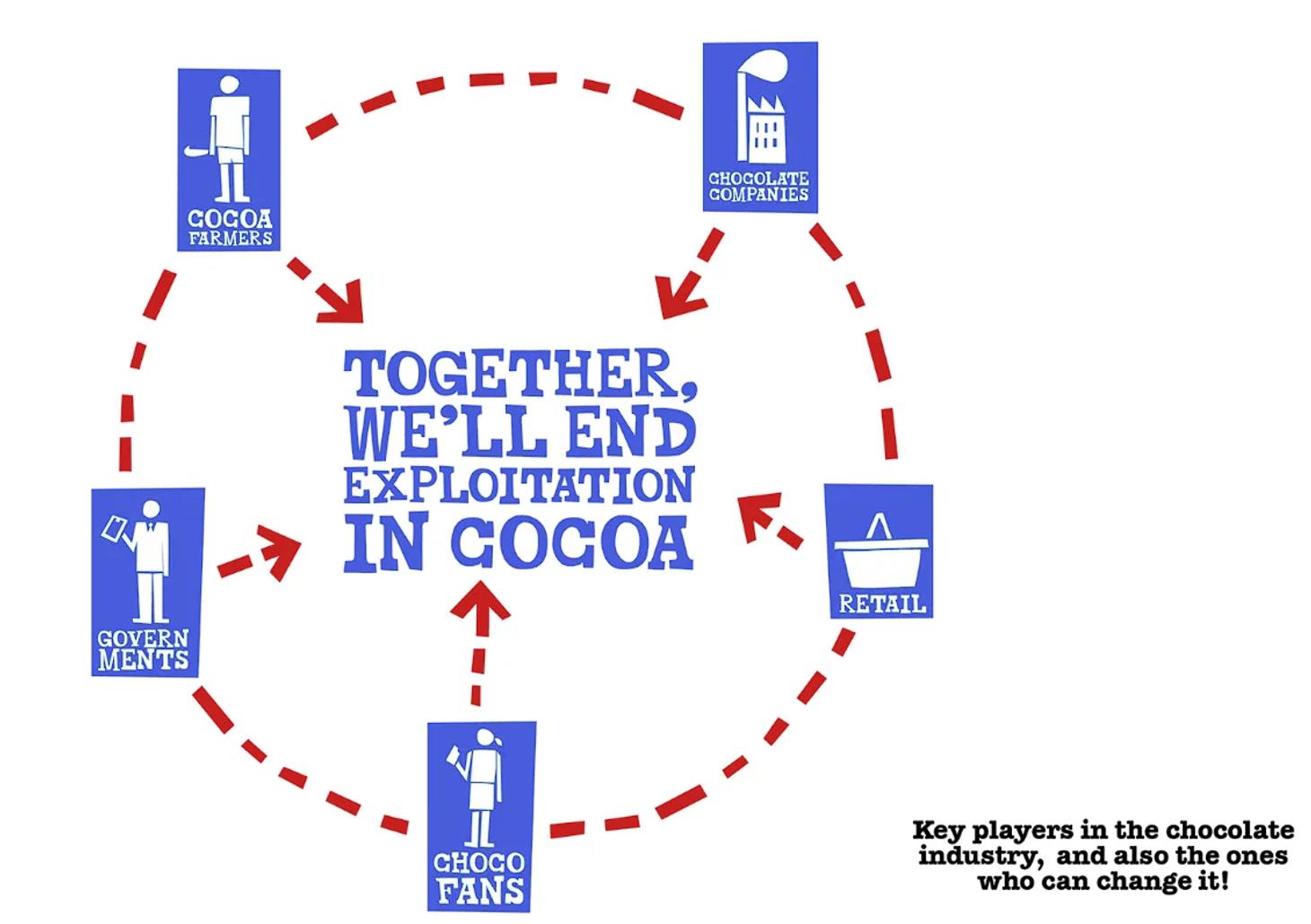
“Our vision is 100% slave-free chocolate – not just our chocolate, but all chocolate worldwide.”
Why it works:
- Describes a finished state, not a KPI – either all chocolate is slave-free, or it isn’t.
- “Not just our chocolate” takes it from being a brand vanity project and makes it a challenge to their whole category.
- Easy for anyone in the business to use as a progress check: are we closer to that world this year than last?
- Lines up neatly with their mission about making slave free “the norm”, so the stack hangs together.
What to learn:
- Write your vision as the end of the story: “When we’ve done our job, X will be true.”
- Avoid hedging. If your vision sounds like “somewhat better than today”, you’re writing targets, not a north star.
Brand Mission – The “How”
If vision is where you’re heading, brand mission is how you plan to get there – right now. It connects the stretch of your vision with what your teams actually do on Monday morning.
A good mission helps answer:
- What business are we really in?
- Who are we here to serve?
- What do we deliver for them, and how?
A brand mission statement is a short, action-oriented description of what you do, for whom, and how that moves you towards your vision. It should:
- Be written in the present tense
- Name your core activities and audiences
- Hint at how you’re different
- Be specific enough to guide trade-offs
A simple scaffold:
We [do/provide this] for [these people] by [this distinctive approach], so that [result that supports our vision].
It doesn’t have to be this exact format, of course. But again, it’s a handy sense check for what you’re trying to say.
Real World Brand Mission Examples
AS Watson Group
“Empowering customers to look good, do good, and feel great through excellent services and accessible products provided on our O+O retail platforms.”
AS Watson Group
Why it works:
- Opens on the customer’s experience: look good, do good, feel great – clear, human outcomes.
- “Excellent services and accessible products” are things you can design, measure and improve.
- “O+O” (online + offline) ties the mission to how the business actually runs, not an abstract “ecosystem”.
- You can trace a clean line from purpose (smiles) and vision (first-choice destination) into this “how”.
What to learn:
- Start with how life changes for your customer, then spell out what you do to make that happen.
- Name at least one concrete lever – stores, platforms, people or product – so the mission is buildable, not airy-fairy.
Is your “About us” page full of “synergy”, “enhancing”, and other fluff? Check out our guide to building a branded content strategy that earns attention instead of eye-rolls.
Purpose vs Vision vs Mission: Key Differences and How They Work Together
On their own, purpose, vision and mission are useful. Together, they become a simple operating system for your organisation.
- Purpose sets your stance: why you exist and what you’re here to change.
- Vision sets your direction: the future you’re aiming at.
- Mission sets your focus: what you actually do now, and for whom.
You can think of them as a stack:
- Brand purpose (why) – enduring, values-led and hard to copy.
- Brand vision (where) – a north star for the next 5–10+ years.
- Brand mission (how) – your current plan of attack: products, services and experiences you deliver today.
If that stack wobbles, you feel it fast: teams pull in different directions, decision-making slows down, and you end up with a brand platform that looks great on slides but falls apart in the real world.
Mission vs Vision: How to Tell Them Apart
Most confusion happens between mission and vision statements. A lot of “mission statements” are actually visions in Groucho glasses – big future headlines with no sense of what the brand does today.
Use this quick test:
- Could this be true today?
- If yes, it’s probably a mission.
- If no, it’s probably a vision.
- Does it describe what we do, or what we want to see?
- What we do → mission.
- What we want to see → vision.
Mission is the route, vision is the destination (and purpose is the reason you set off in the first place).
How to Define Your Brand’s Purpose, Vision and Mission
You don’t need a three-day offsite to sort this. You do need honest input and the discipline to keep it simple.
1. Start with what’s already true
- Talk to leaders, employees and customers – what do they think you stand for?
- Audit existing statements, values and decks.
- Look at behaviour: products, services, campaigns, culture, hiring.
You’re hunting for patterns: problems you always come back to, communities you care about, the kind of work your team is proudest of.
2. Clarify your purpose (your “why”)
Ask:
- If we disappeared tomorrow, who would genuinely miss us?
- What gap would open up in people’s lives or in our category?
- What change do we want to see for customers, communities or the wider world?
Draft one line that answers:
We exist to [create this change] for [these people] so they can [do/experience this].
You don’t have to literally write it that way, but if you can’t fill in those blanks, your purpose isn’t done cooking.
3. Sketch your vision (your “where”)
With purpose set, sketch the future:
- If our purpose scaled, what would look different in 5–10 years?
- What do we want to be trusted for?
Write a short vision statement that sounds like a headline from the future. Make sure it clearly grows out of your purpose and is ambitious but believable.
4. Define your mission (your “how, right now”)
Bring it back to today:
- What business are we really in?
- Which services, products and experiences are core, and who are they for?
- How does our approach move us towards that vision in a way others can’t copy?
Draft a present-tense mission statement:
We [do/provide this] for [these people] by [this distinctive approach], so that [result that supports our vision].
Then check: can someone in your team see their day-to-day work in it?
5. Stress-test and strip the wallpaper
Put your three statements side by side:
- Clarity: Can you explain the difference between them in one sentence?
- Swap test: If you swap vision and mission, do they stop making sense? If not, they’re too similar.
- Decision test: Could you use them to justify saying no to a project or partner? If not, they’re still wallpaper.
Finally, remove the corporate fluff that makes every brand sound the same:
- “Innovative” – show how you change things instead.
- “World-class” – at what, according to whom?
- “Leading” – if anyone in the category could say it, it’s not distinctive.
- “Solutions” – say what you actually make.
- “Passionate” – let people feel it in your work, not your copy.
If your statements still work with a competitor’s logo on them, you’ve got more editing to do.
We Can Help You Create a Purpose-Driven Brand
Most brands have some dusty old statements. Few have clarity or a reason behind them.
At Don’t Panic London, we help you build purpose-driven campaigns – work that earns attention and makes people actually feel something. If your purpose, vision and mission feel vague or out of sync with how you operate, we can help.