

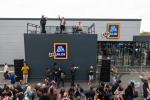
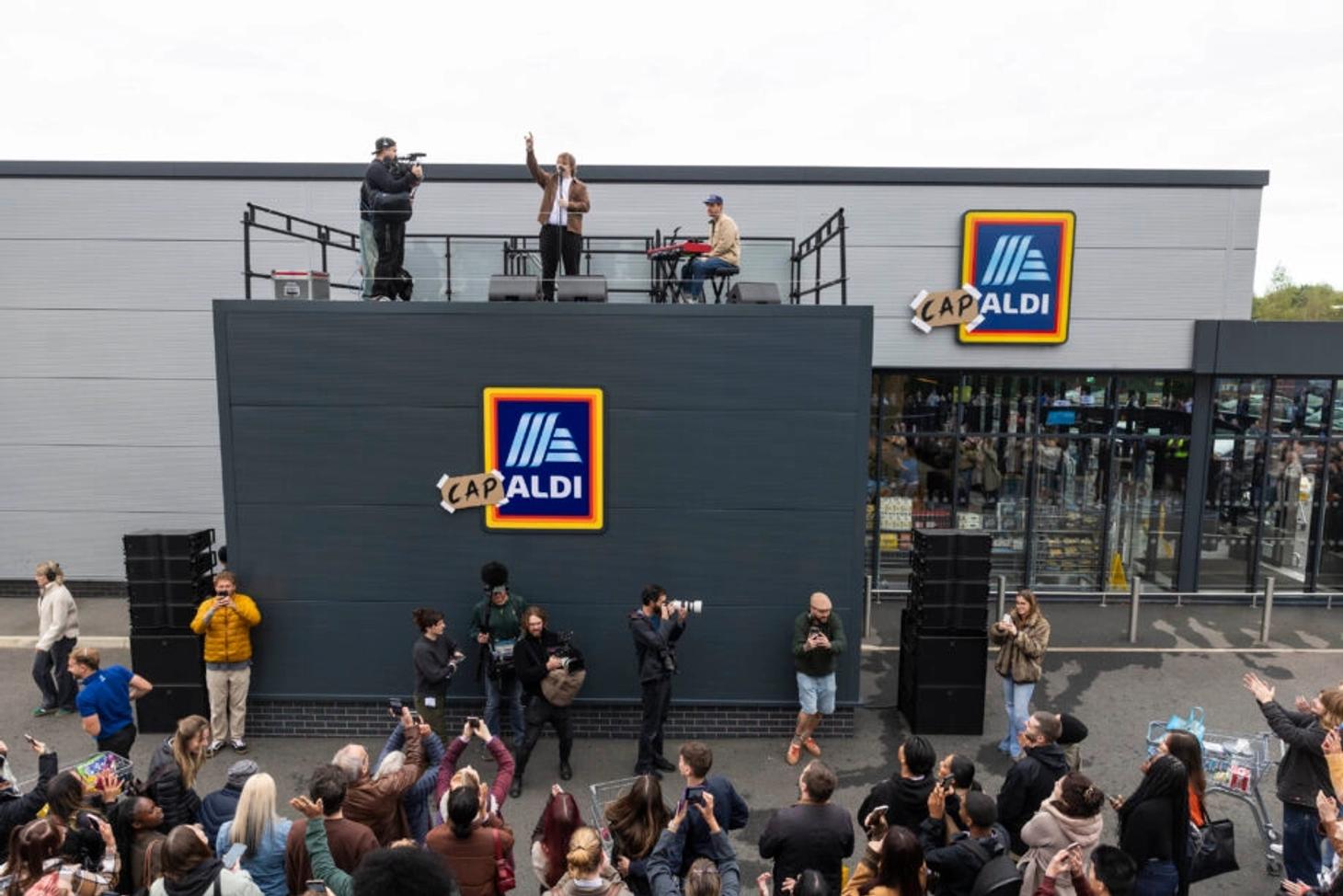
In September 2025, Lewis Capaldi played a three-song set on the roof of a Nottingham Aldi. Someone had taped a giant cardboard "Cap" over the fascia. For one afternoon, the discount supermarket was Cap-Aldi, and Taylor Herring reported 1,274 pieces of coverage on the back of those few short hours.
No media budget buys a scene like that. That's the whole point of a good stunt. One idea, dropped into a moment people already care about, that earns its place in the conversation.
This is a working shortlist of the PR stunts and campaigns worth studying. Some are ours. Some belong to teams we rate, and the best of them leave you something to pinch for your own next brief.
The best PR stunts and campaigns at a glance
- Samaritans' Wedding Day (Campaign, 2025): A winter-appeal film that earns attention through sheer storytelling.
- Astronomer's temporary spokesperson (Stunt, 2025): A viral crisis flipped into a razor-sharp reactive hire.
- Killed Saving Lives (Campaign, 2025): A 10-metre memorial that made an abstract death toll impossible to walk past.
- Cap-Aldi (Stunt, 2025): A supermarket roof, a surprise gig, and a pun that wrote its own headlines.
- Larry 4 Leader (Stunt, 2022): A Downing Street cat's spoof leadership bid, aimed square at a tiny electorate.
- Premier Inn's guilty-conscience robes (Stunt, 2025): A product drop that hitched a ride on the nation's biggest whodunnit.
PR stunts vs PR campaigns: what's the difference?
A PR stunt is a single, time-boxed act built to earn attention now: one moment, one hook, engineered to travel. A PR campaign is a sustained idea that runs across time and channels, building meaning through steady repetition. Most of what follows are stunts, with a couple of campaigns for contrast.
For a deeper dive into stunts, there's our roundup of our favourite PR stunts of all time.
The best PR stunts and campaigns, in detail
Samaritans' Wedding Day
In November 2025, we made Samaritans' Wedding Day, the hero film for the charity's 2025 Winter Appeal. It follows a father, Michael, alone and distressed in his car, intercut with his daughter getting ready to walk down the aisle. The future a life still holds, and the call to Samaritans that keeps it within reach.
What made it work: Restraint. Directed by Max Fisher with Rogue, the film trusts the story to do the work and never reaches for a twist. On a subject this heavy, spectacle would have cheapened it. A special-build billboard in Hammersmith, drawn from a real caller's story, gave the film a physical anchor in the city.
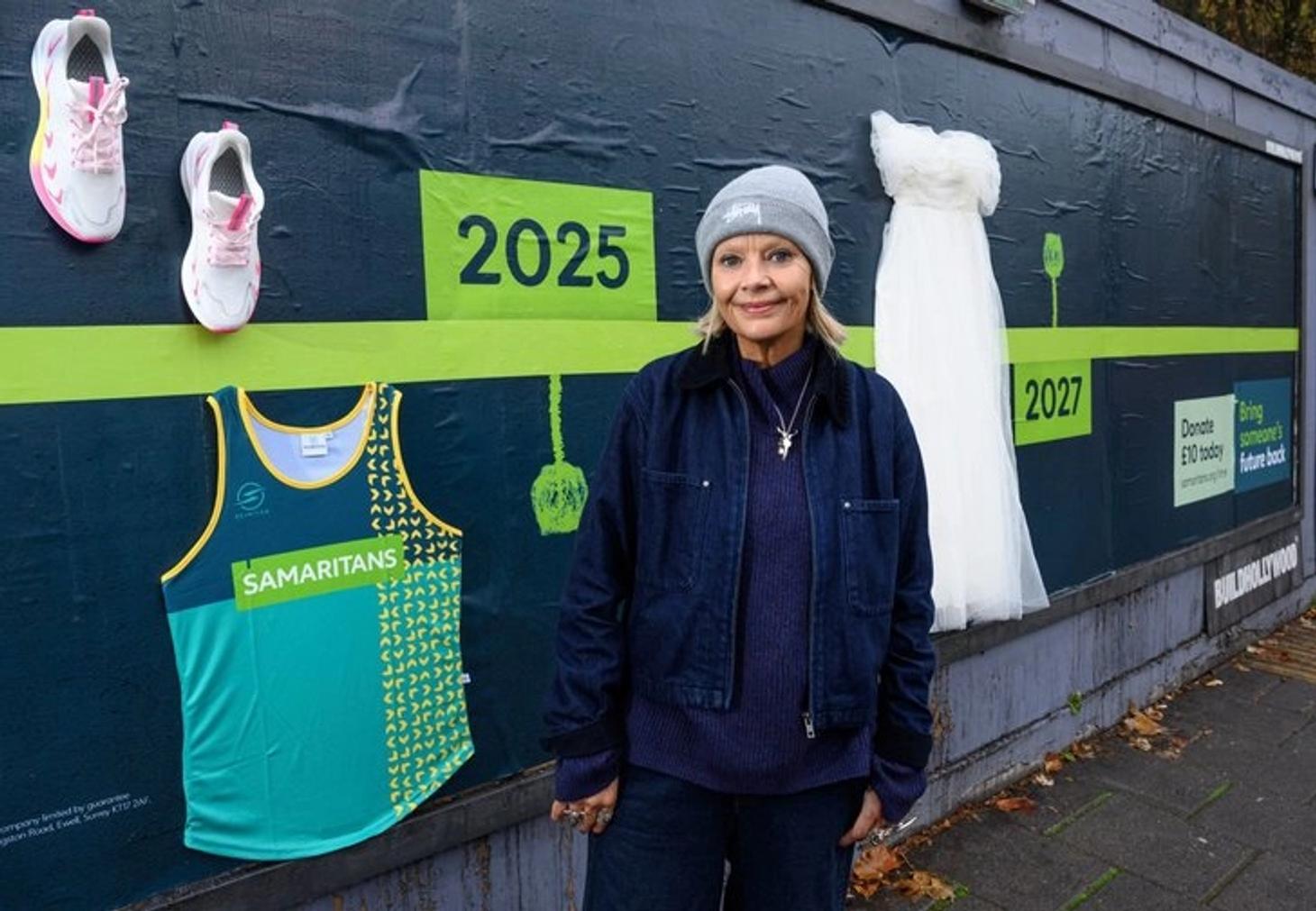
The results: The film anchored the charity's 2025 winter appeal and its call to pick up the phone. It went on to win Gold at the 2026 Smiley Charity Film Awards and was shortlisted for Best Fundraising Campaign at the 2026 Purpose Awards.
The lesson: For purpose-led work, restraint travels further than spectacle. Give the audience one true story told well, and trust them to feel the rest without being told how.
Astronomer's temporary spokesperson
When two of Astronomer's executives were caught on a Coldplay concert kiss-cam in July 2025, the data company had a full-blown viral crisis on its hands. Days later, it released a video starring Gwyneth Paltrow as its "very temporary spokesperson", cheerfully fielding the questions everyone was asking and answering none of them.
What made it work: Speed and tone. Ryan Reynolds' Maximum Effort, working with MNTN, skipped the apology playbook entirely. The clip played it straight-faced, cast a knowing celebrity, and turned a pile-on into a punchline before the story had cooled.
The results: Within days, the clip had been viewed more than 36 million times on X, with over 150,000 likes, and another 534,000 on YouTube, as Fortune reported in late July 2025. The tone turned with it. Media-intelligence firm CARMA measured conversation about Astronomer at 50.1% positive and 8.8% negative after the video, having skewed negative through the scandal. For a week, a niche data company was a name people recognised.
The lesson: When the internet is already laughing, the quickest way out is to be in on the joke. Reactive work rewards nerve and speed, and forgives a few rough edges.
Killed Saving Lives
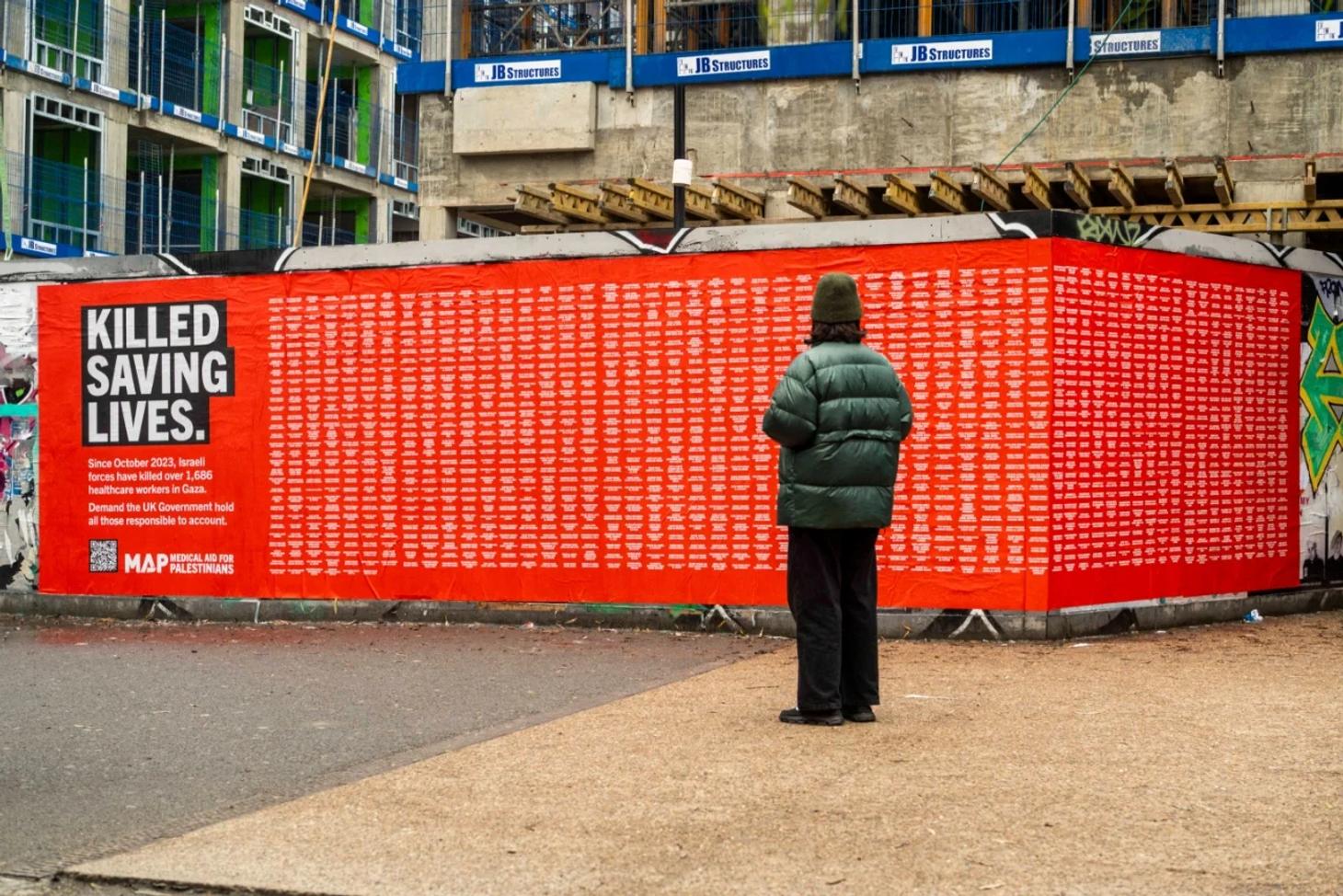
In November 2025, we built Killed Saving Lives for Medical Aid for Palestinians. A 10-metre memorial outside Hackney Wick station, carrying 1,686 names, each one a Palestinian healthcare worker killed since October 2023.
What made it work: Scale made abstract loss legible. A number in a headline is easy to scroll past. A wall of names at standing height, each a person who died doing their job, stops you where you stand. The form matched the message, sombre and unavoidable, with nothing performative laid over it.
The results: The memorial drew national coverage, picked up by Campaign and running as The Guardian's photo of the day. It put the charity's demand for accountability in front of the public in a way they couldn’t ignore.
The lesson: The strongest charity PR stunts don't dramatise. They make the real impossible to ignore, then get out of the way.
Cap-Aldi
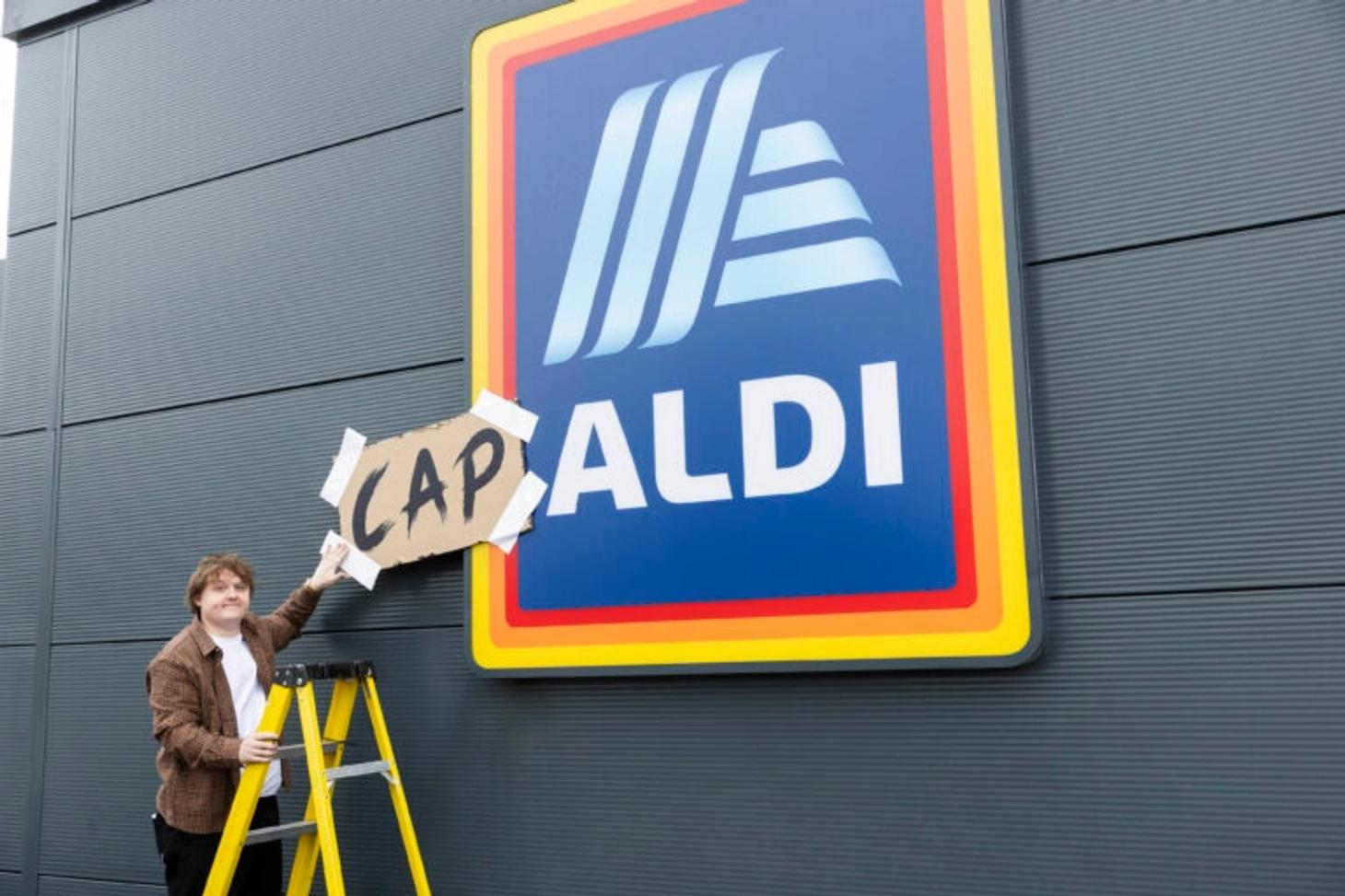
Cap-Aldi was Aldi's rooftop gift to the internet. In September 2025, Lewis Capaldi played a surprise set on top of its Nottingham store the same week his single "Something in the Heavens" dropped, and a cardboard "Cap" over the sign did the rest.
What made it work: The wordplay and the timing. Taylor Herring hijacked a moment already in motion, a singer's comeback week, and stamped the brand onto it with a pun a child could get. Low-fi craft against a real gig, and Capaldi mugging for the cameras: "This is Capaldi on the roof of an Aldi. Sorry to get in the way of anyone's shopping."
The results: Aldi let the pun do the talking, and it wrote its own headlines, later landing the stunt a finalist spot at the 2026 PRmoment Awards. It slotted into a run of cultural-moment rebrands, following the earlier Aldeh takeover for the Oasis reunion, that keeps a discount supermarket in conversations well beyond the weekly shop.
The lesson: Turn up to a cultural moment with real wit and it becomes yours for the day. The best experiential marketing campaigns feel like a gift to the audience.
Larry 4 Leader
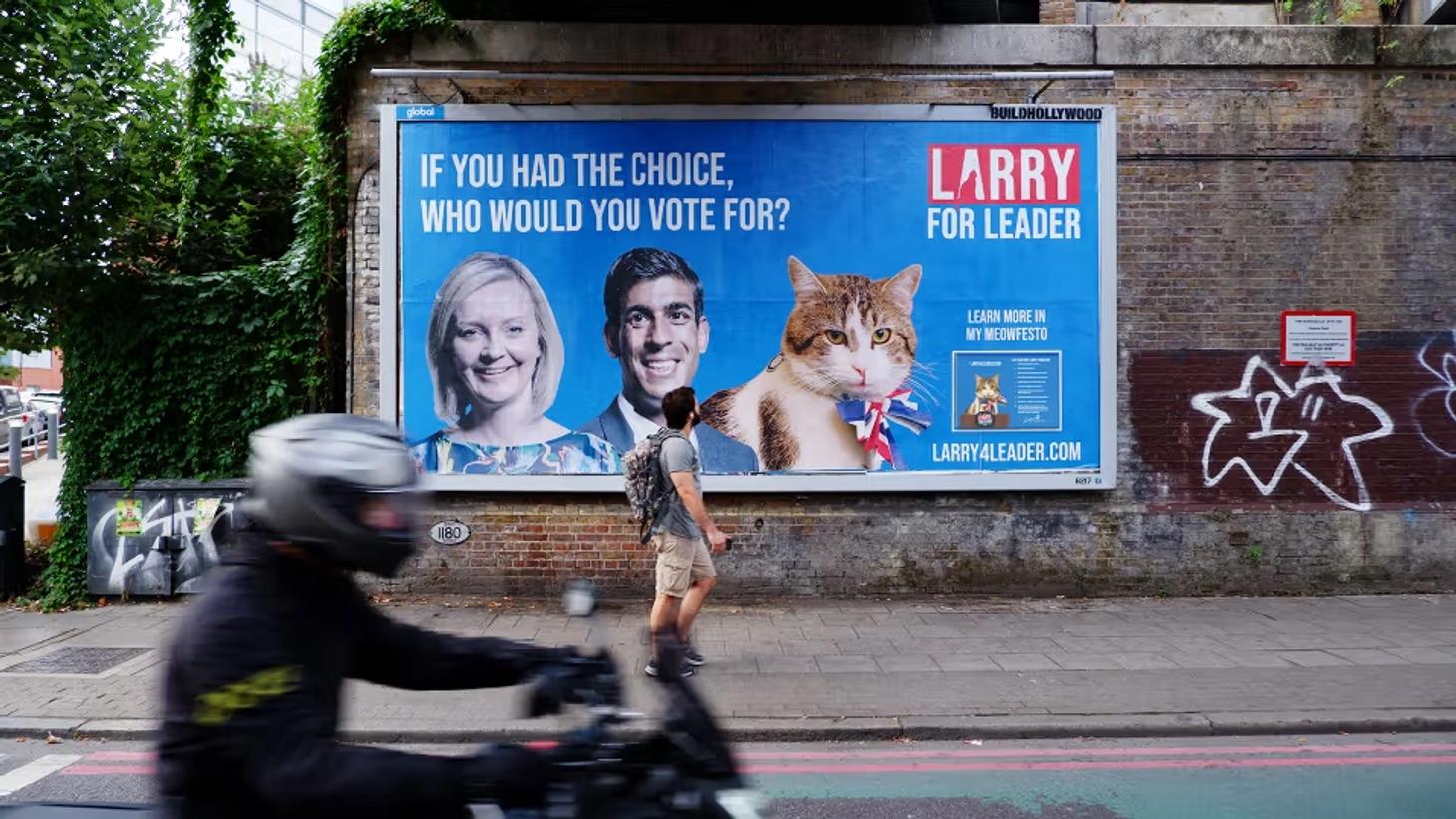
In September 2022, we put a cat forward for Prime Minister. Larry 4 Leader ran Downing Street's resident cat as a spoof candidate through the final week of the Conservative leadership race, under the hashtag #YesWeCat. Larry probably would have lasted at least as long as that lettuce.
What made it work: A sharp point wrapped in something shareable. Four billboards carried tear-away "meowfestos", a microsite gave Larry a manifesto, and the @Number10Cat account worked the joke on social. Underneath the silliness sat a real one: a tiny membership was picking the next Prime Minister, and almost no one else got a say.
The results: A single tweet of Larry in a Union flag tie drew more than 14,000 likes, and by our own count the campaign ran to 70+ press features, 30,000+ visits to the Larry4Leader site and 50,000+ interactions with #Larry4Leader. The billboards went out under a Don't Panic, Build Hollywood and PA credit, and a parody candidacy turned a serious moment into a talking point.
The lesson: Satire earns attention when it targets something true. A joke with a point behind it travels further, and lingers longer, than a joke told for its own sake.
Premier Inn's guilty-conscience robes
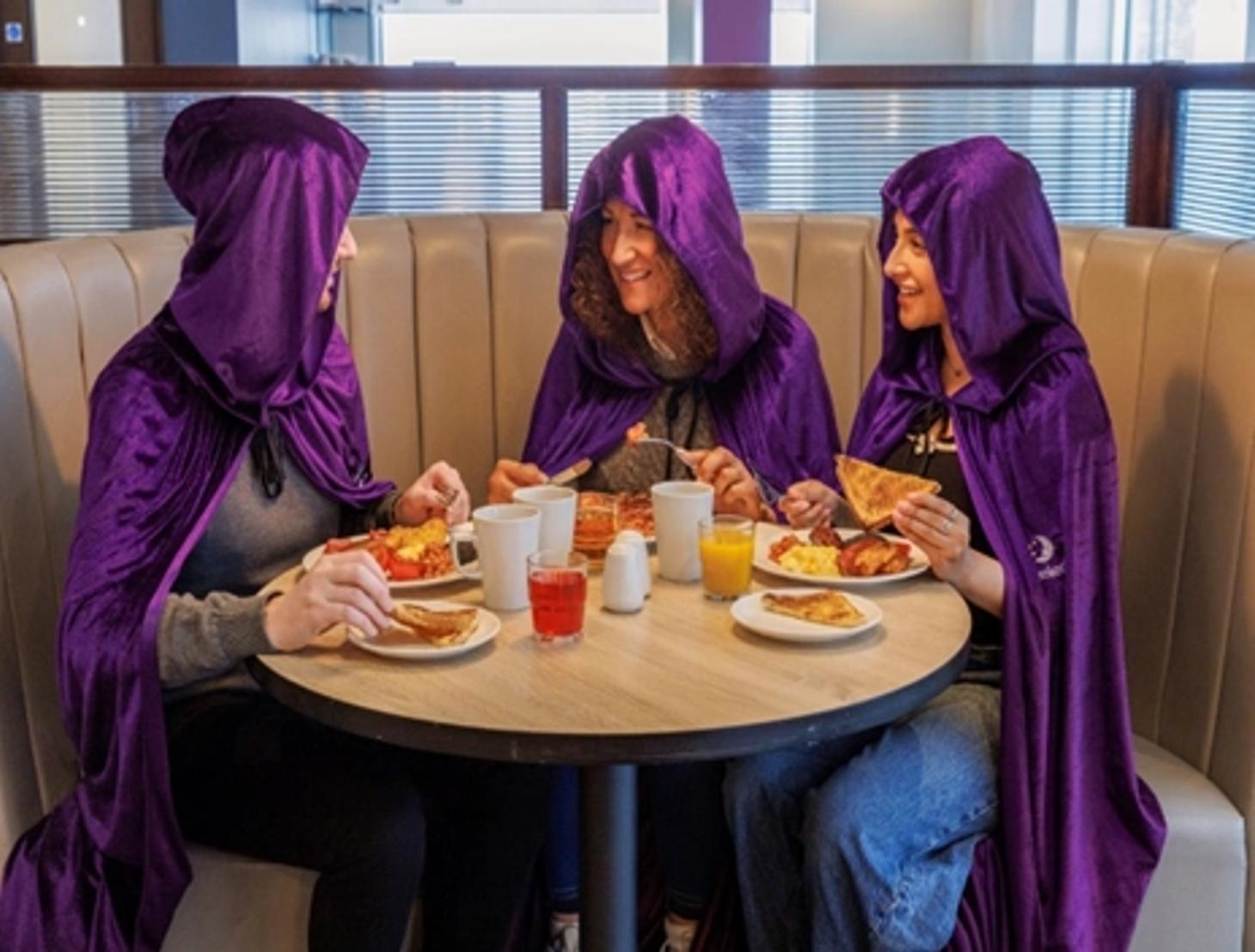
In October 2025, Premier Inn released limited edition Traitors-esque bath robes for guests "with a guilty conscience", timed to the return of the nation's biggest whodunnit. The robes went on offer at its Cardiff, Edinburgh and Birmingham city-centre hotels, with TV psychologists The Speakmans supplying tips for sleeping on a secret.
What made it work: The data story. Premier Inn's own research found that 46% of UK adults lose sleep at least once a week to a guilty conscience, roughly 6.9 million people. A stat like that earns coverage on its own terms, before a single robe ships, and gives the gag a reason to exist beyond itself.
The results: The moment it borrowed was enormous. The Celebrity Traitors finale drew 15.2 million viewers, reported by Advanced Television. The robes attached a small, witty product to a national event, letting the show's audience do the amplifying.
The lesson: The cheapest reach is a moment already happening. Read the cultural calendar, arrive with a product people will talk about and a data hook the press can run, and let the moment carry you.
How do you measure a PR stunt?
You measure a PR stunt by what it earns, not by what it costs. The output that counts is the coverage it wins, the conversation it starts, and the lift in attention and demand it drives in the days after it runs.
The measures worth tracking, each with the maths behind it:
- Earned coverage: Count the placements, but weight each one by the outlet's reach so a national title outscores a small blog. Earned coverage = Σ (each placement × its outlet weight).
- Share of voice: Take your brand's mentions across the period as a share of every mention in the category, then read it as a percentage. Share of voice = (your mentions ÷ all category mentions) × 100.
- Engagement rate: Divide the interactions a post earns, its shares, saves and comments, by the number of people who saw it. Engagement rate = (total engagements ÷ reach) × 100.
- Net sentiment: Subtract the negative mentions from the positive ones and divide by the total, for a score between minus 100 and plus 100. Net sentiment = ((positive mentions - negative mentions) ÷ total mentions) × 100.
- Branded search uplift: Compare branded searches during and after the stunt against your normal baseline. Branded search uplift = ((campaign searches - baseline searches) ÷ baseline searches) × 100.
- Return: Set the value you can honestly attribute to the stunt, whether sales, sign-ups or donations, against what it cost. Return = ((attributable value - cost) ÷ cost) × 100.
Most of this sits under earned media, the coverage you win through the work itself. Track the downside too. A stunt that misreads the room becomes a different kind of case study, as our roundup of PR stunts gone wrong makes plain.
Frequently asked questions about PR stunts and campaigns
Do PR stunts really boost sales?
PR stunts reliably boost attention and brand salience, and that converts to sales when the rest of the funnel is ready to catch the demand. A stunt with a strong product story, real distribution and clear follow-through does far more than one left to fend for itself. Track branded search and consideration alongside revenue for the full picture.
What is the biggest marketing stunt of all time?
The biggest marketing stunt of all time has no agreed winner, but the perennial pick is Red Bull Stratos, the supersonic skydive from the edge of space. It endures because it fused real spectacle with a genuine feat and a live audience. The best are the ones still cited years later.
What are some of the best PR examples?
The best PR examples are the six above, from Cap-Aldi to Astronomer's spokesperson swap. They share a spine: a single clear idea, timed to a moment the audience already cared about, and executed with enough wit or weight that people wanted to pass it on.
How much does a PR stunt cost?
A PR stunt costs anywhere from almost nothing to five or six figures. A well-timed reactive post can run on nerve alone, while a physical build or a celebrity shoot climbs into the tens of thousands. What usually decides the outcome is distribution and timing.
Are PR stunts and publicity stunts the same thing?
PR stunts and publicity stunts are broadly the same thing. Publicity stunt is the older term and sometimes carries a whiff of the cynical, while PR stunt frames the same move as earned-media strategy. The mechanic is identical: engineer a moment worth talking about, then let the talking do the work.
Steal the thinking behind the stunt
The stunts that land are rarely the loudest. They are the ones with a true idea, dropped into a moment the audience owns, and finished with enough craft to be worth sharing. Copy a rooftop gig and you will get a shrug. Copy the thinking, the timing and the reason to care, and you earn attention no budget can rent.
That's the work we do at Don't Panic, turning cultural moments into coverage.
If you're a brand looking for a partner to do the same for you, our approach to earned media is the place to start.