

In 2025, public trust in UK advertising hit a five-year high of 40%, according to the Advertising Association and Credos. Even at its strongest in half a decade, most people still don't trust it. Attention is hard won, and trust harder.
This list judges PR campaigns by one standard: did they earn attention rather than buy it? Some campaigns are carried by their media budgets. The ones mentioned here gave people a real reason to take notice, share, and talk.
We’re showcasing the very best that the PR industry has to offer. Four of the campaigns below were made by us. We’re not ones for false modesty, and hey, it’s our website!
What to learn from the best PR campaigns
- Daisy vs the Scammers: Utility plus entertainment earns coverage; the press angle was built into the idea, not bolted on.
- OilyFans: Satire travels when it sits on a real tension, and the audience handles the distribution.
- Lidl by Lidl: Fold the campaign into a joke people already feel part of, and promotion starts to read as culture.
- Killed Saving Lives: Precision beats amplification; one undeniable statement cuts deeper than a hundred claims.
- Bakers Street: Put a famous voice somewhere people cannot avoid it, and a commute becomes content.
- Stay in the Fight: Build the press moment into the idea; a real reunion gives journalists a story, not a request.
- Big Crispy Food Court: Naming the rival you are taking on gives a stunt an edge most brands avoid.
- An Ode to Leaving: Craft can be the campaign; a film made well enough becomes the story without needing a stunt.
What makes a PR campaign genuinely great?
Many public relations examples are labelled successful because they made noise. That is not the same as capturing attention. The following have all passed the Earn, Fit, Travel test.
EARN: Did it earn attention?
Would this still have spread if the paid budget shrank? Earned media lives or dies on whether the idea itself pulls people in (hence the name!).
FIT: Did it fit the truth of the brand or issue?
A campaign can be clever and still feel hollow. The strongest digital PR campaigns feel native to the brand and the audience’s mood.
TRAVEL: Did it create a response that people wanted to join or pass on?
Coverage alone is not the point. Behaviour is. Did people share it, debate it, imitate it, quote it, or carry it further? Creating attention that was not fleeting.
The best PR campaigns
Daisy vs the Scammers (Virgin Media O2 / VCCP, 2024)
No one likes scam calls. Virgin Media O2’s AI granny, Daisy, was built to waste scammers’ time by keeping them on the phone. Giving time-wasting scam artists a taste of their own medicine! The campaign landed at a moment when such calls felt common, exhausting, and impossible to avoid. It highlighted a real issue at a pivotal cultural moment and landed with great effect.
What made it work
Watching scammers get trapped in long calls with an AI pensioner was satisfying, funny, and informational. No jargon. Just a simple thought, executed well: let the scammers waste their own time. Everyone could resonate with this campaign - because we’ve all been there.
Results
It generated 1,800+ pieces of coverage globally, 1.7 billion earned impressions, and 17% unprompted UK recall. It also won Gold at Cannes Lions 2025 in the PR for Use of Technology category.
The lesson
When practical utility and entertainment line up, coverage follows. The best PR campaigns do not bolt a press angle onto the side. They built one into the idea.
OilyFans (Global Witness / Don’t Panic London, 2023)
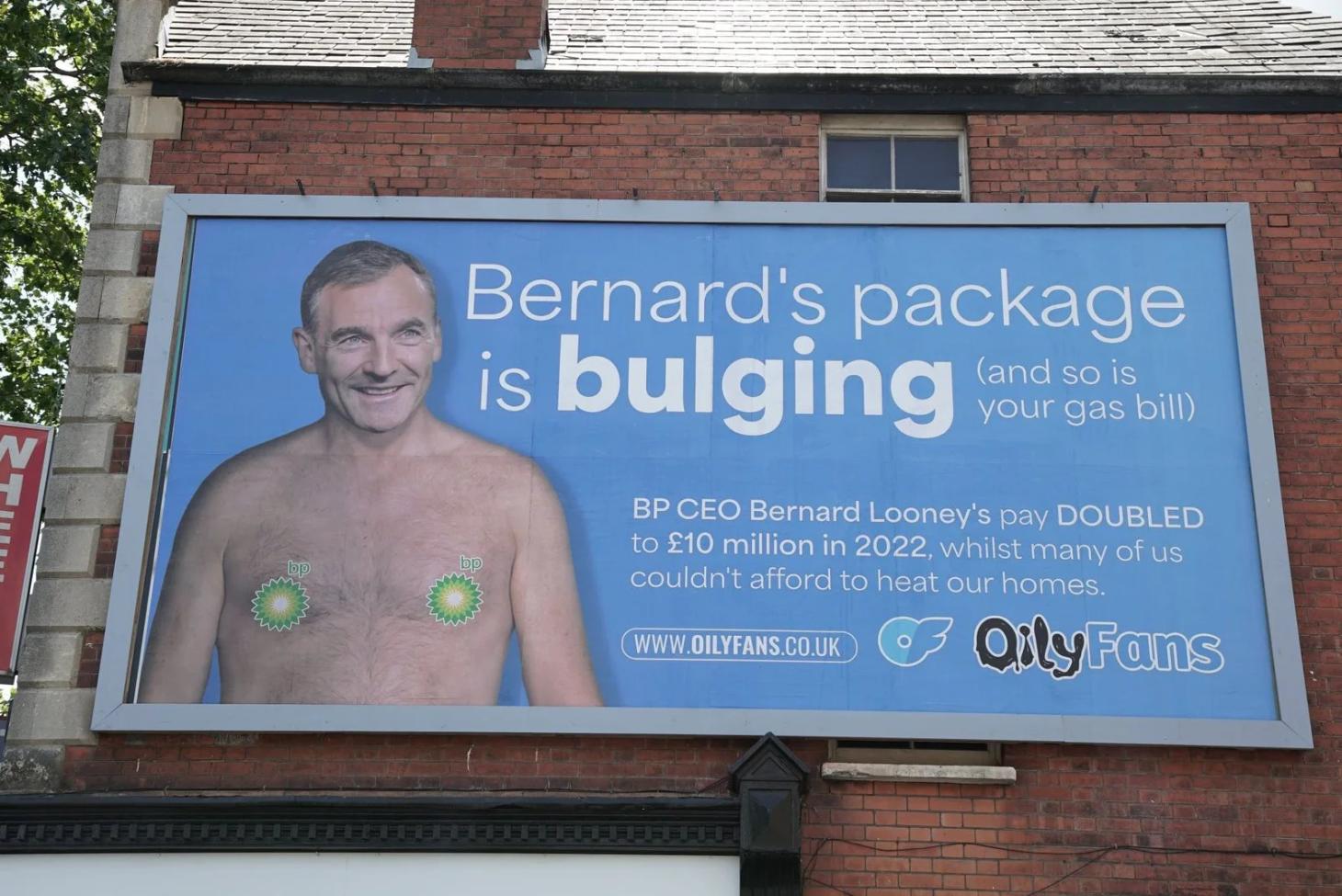
We all know what this pun is all about. Immediately recognisable and eye-catching, OilyFans took the visual language of selling feet pics (and… so on) online and turned it into political satire, aimed at fossil fuel sponsorship around COP28. It was controversial and direct, embodying Don’t Panic London’s appetite for taking creative risks.
What made it work
Climate comms usually avoid confusion. OilyFans did the opposite, giving people a format they recognised, before turning it on its head. Most people have heard of OnlyFans - some people even use it (shocker). OilyFans was a creative way to trade on that recognition.
That is why it belongs in any conversation about PR stunts with a deeper meaning.
Results
It drew 700k+ impressions on Twitter/X through organic reach alone, held the Reddit front page for five consecutive hours, and passed 12k+ Instagram views in the first 24 hours. National press including Metro, the Express and the Independent picked up the stunt, all off five days’ turnaround and no paid media.
The lesson
Satire travels when it is built on a real tension, not just a joke for the sake of it. If the framing is clear enough, the audience does part of the distribution for you.
Lidl by Lidl (Lidl / The Romans, 2025)
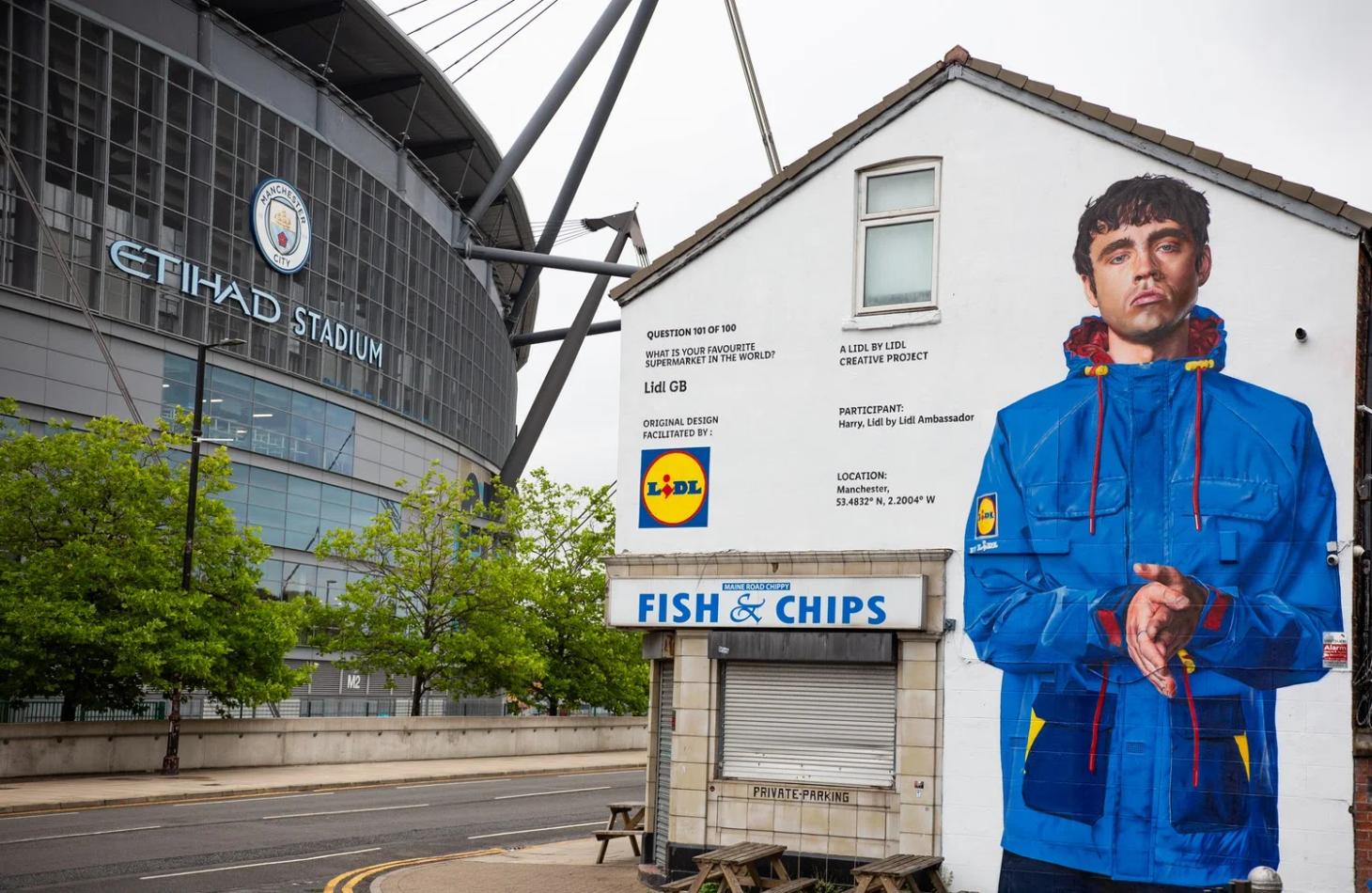
♫ Lidl by Lidl, we’re gonna commoditise nostalgia... ♫ When the Oasis reunion landed, Lidl and The Romans (which sounds like a band itself) took a two-year in-joke with the Gallagher brothers and turned it into a fashion brand built for the shows.
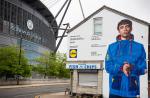
The first drop was a parka made for gigs: beer-and-waterproof, with beer-cooling pockets, a bottle-opening zip tie, and a Lidl badge on the sleeve. They unveiled it on a mural outside the Etihad, in the same spot as Liam's old Stone Island mural, so the reveal landed where the fans already were.
What made it work
The nostalgia-based pun opened door. Fans were handed something they could actually own, not just a gag to retweet, and the parka sat somewhere between a merch drop, a meme, and a mass PR story. That made it portable across earned media in a way a one-line joke never travels.
Results
The parka sold out in two minutes. The campaign drove 279 organic publications and 1.1 billion reach, with eight national broadcast slots including This Morning and Lorraine. 195,000 fans tried to get hold of one, with all proceeds going to charity, and even Noel's agent got in touch asking for jackets for the band.
The lesson
When a brand turns the audience's own running joke into something they can buy, promotion stops feeling like promotion. It starts feeling like the culture recognising itself.
Killed Saving Lives (Medical Aid for Palestinians / Don’t Panic London, 2025)
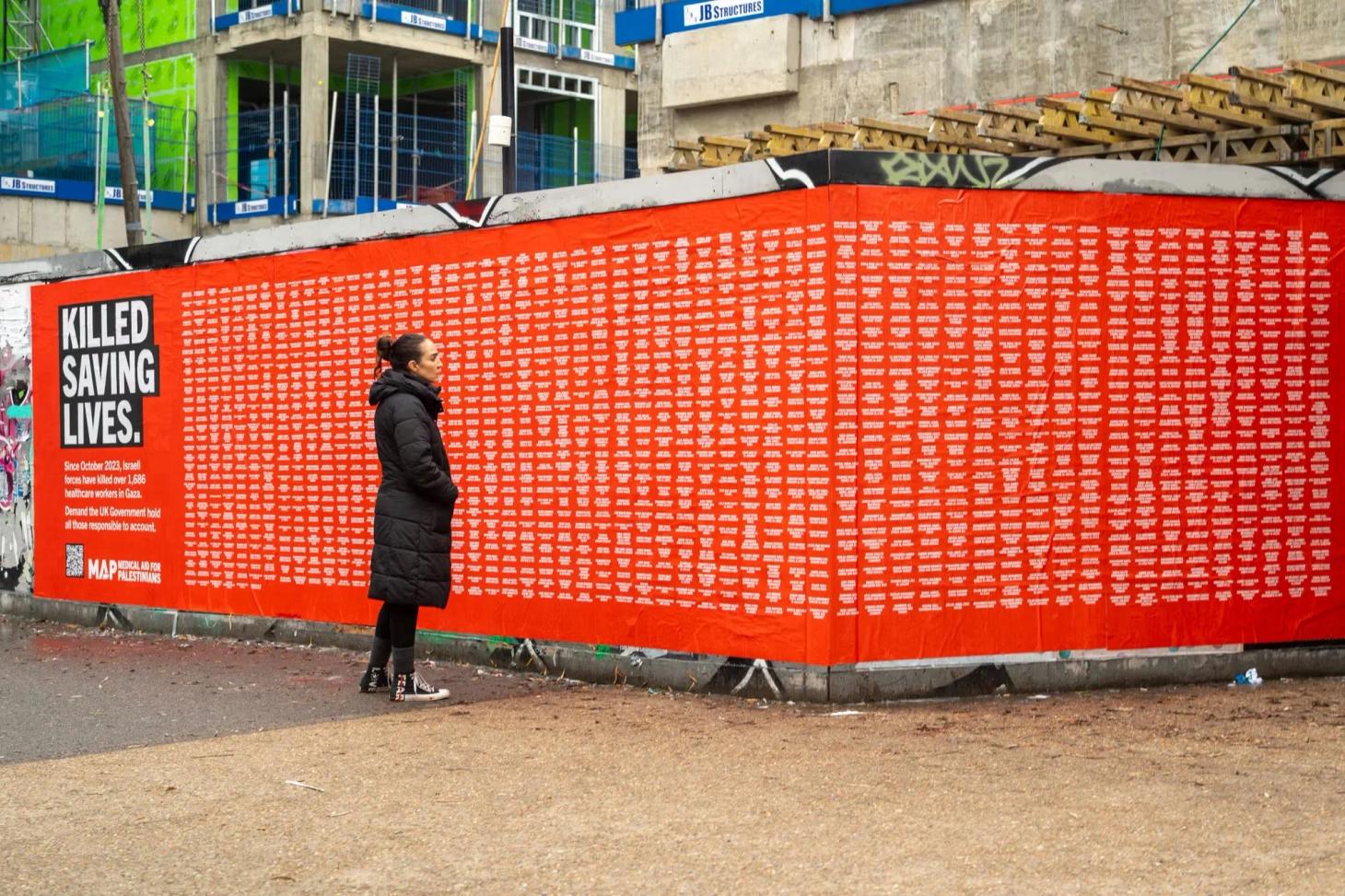
Sometimes campaigns do not need to be funny, sophisticated, or clever. Telling the truth is enough. Killed Saving Lives was a 10-metre installation at Hackney Wick station listing the names of 1,686 Palestinian health workers killed in Gaza. There was no need for abstraction.
The names did the work. The scale did the rest.
What made it work
Humanitarian issues are often undermined by the language used. Here, striking visuals combined with real-life names forced people to stop and think. And people encountered it in transit and in everyday life, which made the advert much harder to dismiss.
That is why strong charity PR campaigns often work well with visible physical spaces.
Results
The installation stood 10 metres long in a high-footfall station, listing 1,686 names in a space commuters could not edit out or scroll past. Its power came from scale and specificity: every name a person, the whole wall a number too large to wave away.
The lesson
Sometimes the most powerful PR move is not amplification. It is precision. One striking and undeniable statement (in a prominent location) can cut deeper than a hundred general claims.
Bakers Street (Warburtons / Joyful & Triumphant, 2026)
What does a 150-year-old bakery have in common with a Hollywood legend? A crumpet-shaped Tube station. To mark its 150th anniversary, Warburtons handed Morgan Freeman the Tannoy at Baker Street and rebranded the Jubilee line platform "Bakers Street", roundels redrawn as giant crumpets. For two days, commuters were told to "mind the bap".
What made it work
The stunt lived where its audience already stood. A station takeover cannot be scrolled past, and Freeman reading "stand behind the buttery yellow line" turned a routine commute into something people stopped to film. It carried the brand’s northern humour into the middle of London without explaining the joke.
Results
Verified hard metrics are not published yet. What is confirmed is the two-day Baker Street takeover with TfL, the platform rebrand, Morgan Freeman on the announcements, and a supporting TV spot. The campaign’s own research cites 71% of crumpet-eating Brits treating them as a cultural staple.
The lesson
A famous voice is not the idea. The idea is putting it somewhere people cannot avoid it. Earned attention often comes down to choosing the right physical space and trusting the audience to share what they find there.
Stay in the Fight (Oxfam / Don't Panic London, 2023)
Legacy ads usually whisper. They picture the older generation as frail, sentimental, already looking back. Stay in the Fight refused the whole premise. It cast Boomers as the original protest generation and asked them to keep fighting, by leaving a gift in their will.
The film follows Edith, a lifelong protester, telling her grandchildren about her activist youth. The reveal: the young protester in the flashbacks is present-day Joyce, marching in Nairobi. Two generations, one fight.
What made it work
The PR was built into the idea, not bolted on after. To launch, Oxfam reunited protesters from the 1983 Hyde Park peace march on the eve of its 40th anniversary, and put their faces at the centre of the campaign. That gave journalists a real story with real people, not a charity asking for coverage. The film did the emotional work; the reunion did the earned-media work.
Results
The campaign earned 240+ pieces of coverage, including the Evening Standard, the Independent and Mail Online, reaching over 50 million. During the airing window, legacy consideration rose 10% among the target audience, and Oxfam recorded a 28% shift in legacy actions, new enquiries and pledgers, against the previous year.
The lesson
Earned attention starts with respect for the audience. Tell people who they are, not who you assume them to be, and give the press a real moment to point a camera at.
Big Crispy Food Court (Chili’s, 2026)
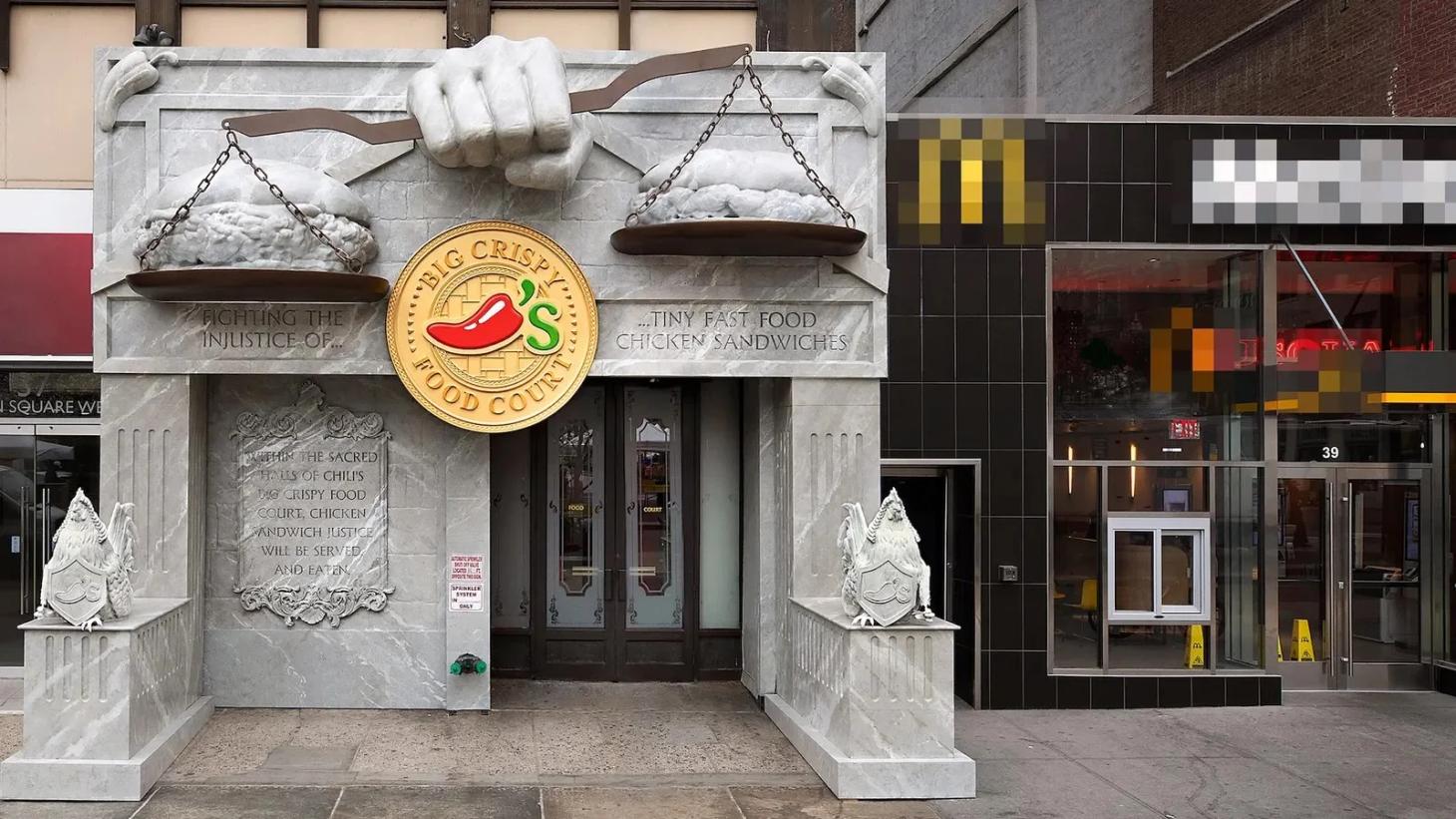
What if your rivals had to stand trial? Chili’s built a mock food court in New York’s Union Square and put fast-food chains, McDonald’s chief among them, in the dock over value. Returning to the same block as its earlier pop-up was deliberate. The dig was not subtle, and was not meant to be.
What made it work
The campaign picked a fight people were already having. Fast-food prices had become a genuine public grievance, so a brand staging that frustration as theatre gave the audience something to cheer for. Naming the rival directly gave the stunt an edge most brand activations avoid.
Results
The pop-up ran for two days in Union Square, staging a mock courtroom that put named fast-food rivals in the dock over value. It anchored the wider Big Crispy campaign and earned coverage off the strength of the stunt rather than a media spend.
The lesson
Taking a clear shot at a named competitor is risky, which is exactly why it travels when it lands. Brands earn attention when they say the thing their rivals are too cautious to say out loud.
An Ode to Leaving (National Trust / Don't Panic London, 2026)
Most legacy ads sell death gently. An Ode to Leaving sells leaving instead. The 60-second film follows one woman through a lifetime of goodbyes to the places she loves, every visit ending, every ending worth it.
It closes on the quiet ask: leave a legacy, so the places stay protected for the people who come after.
What made it work
Legacy giving is a hard sell because it asks people to picture their own absence. The film reframes that as continuity rather than loss. Shot across Lyme Park, Bodnant Garden, Penrhyn Castle and Porthdinllaen, it trades the genre's usual sentimentality for something closer to how the feeling actually lands: bittersweet, ordinary, earned.
Results
The film earned pickup across the creative trade press, including shots, Little Black Book and David Reviews, on the strength of the craft rather than a stunt or spend. For a legacy brief, that is the hard part: getting an industry that rewards noise to stop for something quiet.
The lesson
Not every PR win comes from a stunt. A film made with enough craft becomes the talking point itself. Get the emotional reframe right and the work earns its attention by being good rather than loud.
FAQs
What makes a PR campaign go viral?
A PR campaign goes viral when the reaction is baked into the idea. People need a reason to pass it on that makes sense socially. It might be funny, useful, emotionally charged, or politically sharp. The key is that sharing feels like participation, not unpaid labour for a brand.
What is the most successful PR campaign of all time?
There is no clear overall winner, because success usually looks slightly different. Some campaigns dominate in terms of reach. Others shift policy, donations, recall, or public conversation. A better question is whether the campaign changed behaviour and stayed memorable. The best PR stunts of all time do both.
What is the difference between a PR campaign and an advertising campaign?
Advertising buys placement. PR earns pickup, discussion, and wider public response. The two often work together, but they are not the same. An ad can be seen because media money pays for it. A PR campaign proves its strength when journalists, creators, or audiences carry it further without being paid to do so.
How do you measure whether a PR campaign worked?
Measure a PR campaign on three things: did it earn attention without paid weight, did it fit the truth of the brand or issue, and did it travel because people chose to pass it on. Reach and impressions matter, but the sharper test is whether behaviour changed and the work stayed memorable.
Where PR goes from here
The campaigns that earned their place here share a direction, not just a method. Audiences are getting faster at spotting paid noise and quicker to reward work that says something true.
We’re willing to bet that the brands that win the next few years will be the ones that build the reaction into the idea, treat their audience as participants rather than targets, and have the nerve to take a stance when the moment calls for it.
That is the work Don’t Panic has been making for two decades, campaigns people choose to carry further. If you want ideas that earn attention rather than rent it, contact us and let’s make something worth passing on.